




Making Room for Young Women to Lead in Southern Africa’s Climate Response
Posted in : Blog on 4 November 2026
This blog post is part of CIWA’s Male Champions for Women’s Empowerment blog series.
In Nkhata Bay District in Malawi, a girl’s unsafe day can begin at the borehole. With little access to safe water, girls walk 2–3 kilometers along isolated paths to fetch it, often after walking a further 2–4 km to school. As one young woman leader from the district puts it, the climate crisis is felt on “the road to the borehole” and “the road to school.”. Our response must not lose sight of how young women experience it.
Years of working with young women on the frontlines of the climate crisis, from drought in Zambia’s Gwembe District to floods in south–eastern Zimbabwe, have taught us that the damage is never shared equally. Young women are often the first to drop out of school and face a higher risk of violence and early marriage than young men. Yet climate programs run by governments and their development partners and the emergency responses that follow when disaster strikes still tend to treat young women as people to be protected from a distance—counted and cared for, but never the ones to lead.
In my role as a researcher and program officer at ActionAid Zimbabwe, I work to build resilient communities. My job is to find out what works in climate response and share it, but above all, to help communities find lasting ways to adapt to a changing climate.
In 2023, I supported a group of young women who led their own research into the risks young people face in crises. In Zimbabwe, four young women researchers went into their communities, asked questions, and made sense of the answers, alongside peers in Ethiopia, Nigeria, and Uganda. Their findings became ActionAid’s 2024 report Protecting the Rights of Youth in Crisis.
Learning lessons from young women
Working alongside them changed how I see my role. They did not need me to explain their experiences to them or speak for them. They needed someone to help knock on doors that rarely open for them, find resources that rarely reach them, and then step back while they set out their issues in their own words. As a man in a sector where men still make most decisions, I have held onto that lesson. It is why I write this to other men as a member of the Cooperation in International Waters in Africa’s Male Champions for Women’s Empowerment initiative.
That lesson is not mine alone. It is shared by a growing network of young women, colleagues, and partners across Southern Africa who believe that young women are not just victims of the climate crisis, but among its sharpest analysts and most effective leaders.
Step by step, we have turned that belief into action. When the 2023–24 El Niño drought left an estimated 56.8 million people food insecure across the region, we listened to young women in Malawi, Zambia, and Zimbabwe. Their stories shaped our 2024 policy brief, Mitigating Protection Risks for Young Women in Southern Africa, launched ahead of the 44th Southern African Development Community (SADC) Heads of State and Government Summit in Harare. It showed how drought pushes girls out of school and into early marriage and called for young women’s leadership in climate crisis response to be recognized and properly funded.
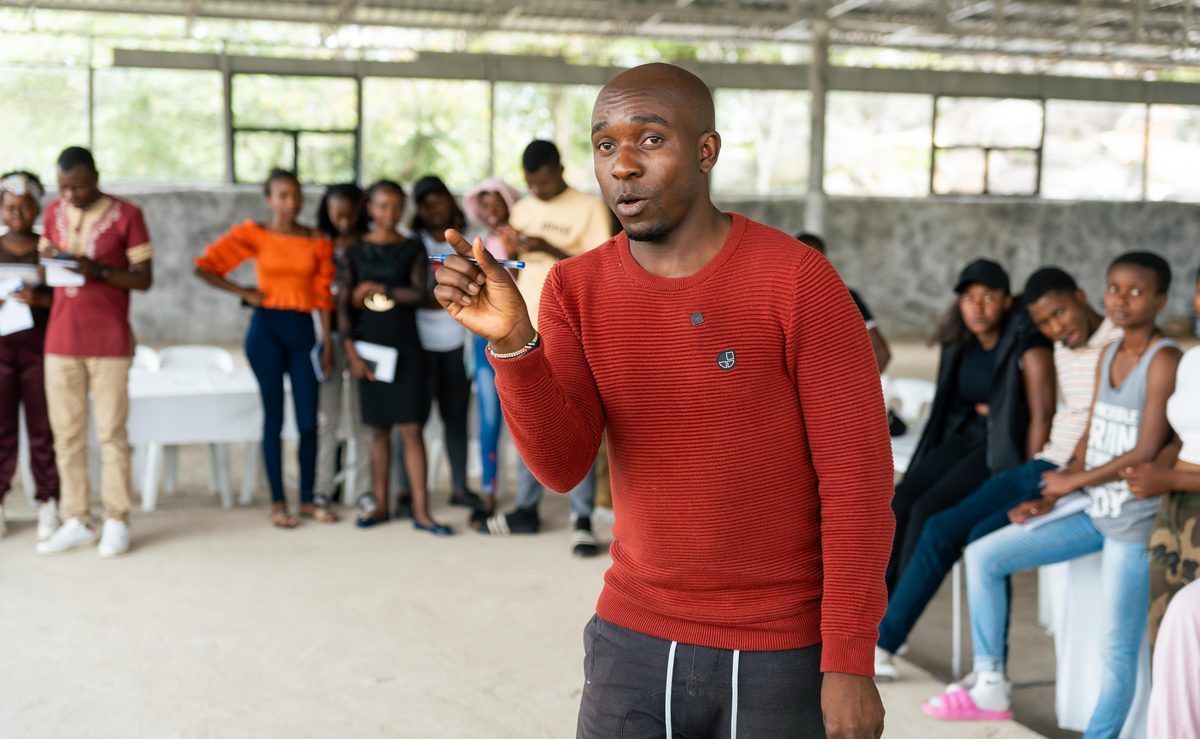
This year, we organized the SADC Regional Young Women’s Protection Bootcamp, which brought together about 20 young women age 18-35 to understand how the climate crisis is changing their lives, strengthen their leadership abilities, and build skills in advocacy and policymaking, starting at the community level. They gathered testimony from their own communities and turned it into a new brief, Not Without Us, to be published in December. Its message is clear: “Young women do not want to be protected by decisions made without us.”
Some of the first young women we worked with returned as Bootcamp trainers, sharing how they are building resilience in their communities and advocating for local and national budgets to fund climate adaptation and disaster risk reduction.
One of them is Diana Tsitsi Harawa, who now leads the Zimbabwe Resilience Network. The network grew out of #ActOnDRMBill, a campaign pressing the government to fast-track disaster risk management legislation. Harawa and her team have scored real wins—the government has made the bill a priority, and the team is working with the Ministry of Local Government’s Department of Civil Protection to pilot local disaster risk management structures that include young people—including women. These structures prepare for disasters, operate the community level of the national early-warning system, and stand ready for recovery in drought-prone Binga District and flood-prone Chipinge and Chimanimani Districts, at opposite ends of Zimbabwe.
When young women lead, solutions are better
The Network also mobilizes young people across Zimbabwe and builds solidarity with young women across the region. Closer to home, it has been learning alongside #Women4Water, a movement of young women we have supported in Chitungwiza, on the edge of Harare, where unreliable water supply and climate stress make water a daily struggle. Rather than wait to be served, they mapped their community’s water problems and pressed the government for reliable water infrastructure. And they got results—the government committed publicly to constructing a dam for water supply and conducted an exploratory study. From that collaboration, we have learned that when young women lead on water, the solutions are better and they last.
This is also the Male Champions’ story. The Male Champions for Women’s Empowerment asks how men in a male-dominated sector can shift mindsets and share power with women. Our climate and humanitarian work has been answering the same question in practice. Whether the setting is a river basin organization or a drought response, inclusion is not something done for young women. It is something built with them.
The timing could not be more urgent. Southern Africa is still recovering from the last drought, and a very strong El Niño currently underway is expected to bring below-average rainfall and extreme heat through the 2026–27 farming season.
At the same time, the money is shrinking. At our young women’s Bootcamp, Harawa described how deep cuts to international aid, including the withdrawal of USAID funding, are hitting grassroots groups includingher network that help communities cope. Her message was simple—young women’s ambition to lead is growing just as the support for it is drying up.
Annita Mutubuki of the Women’s Coalition of Zimbabwe Young Women’s Forum, a Bootcamp participant, put it plainly: “We are already doing the work; the missing piece is often recognition and investment.”
So what can Male Champions do? Three things stand out:
- Share decision making. Make sure young women have seats, and a real say, on the committees that run water points, disaster planning, and budgets. An invitation to comment after decisions are made is insufficient.
- Put money behind their leadership. Back direct funding for young women-led organizations, such as the call in Not Without Us for at least 5 percent of national gender and protection budgets to go directly to them.
- Treat their knowledge as expertise. Use young women’s evidence in planning, early-warning systems, and water management and give them credit for it.
Climate change will keep reshaping the risks young women face in Southern Africa. Whether it also reshapes their power depends on the choices the rest of us make now. Young women have already shown they are ready to lead. Our task is to make room for their leadership.