



Completed Programs
Lake Chad Transboundary Cooperation
Since 2015, CIWA has helped rebuild World Bank engagement in Lake Chad — support that shaped the Lake Chad Development and Climate Resilient Action Plan and laid the technical groundwork for the $170 million PROLAC recovery program. From assessing how climate change, water insecurity, and conflict intertwine to strengthening the Lake Chad Basin Commission’s regional coordination, CIWA has served as the strategic backbone behind efforts reaching over a million people in one of Africa’s most fragile basins. That analytical foundation continues to inform how riparian countries jointly monitor crises and plan cross-border responses today.

The Lake Chad Basin—spanning Cameroon, Chad, the Central African Republic, Niger, and Nigeria—remains one of the world’s most fragile regions, with ongoing insecurity displacing communities and disrupting livelihoods along its border areas. Climate change is compounding the pressure: rainfall is projected to increase significantly by mid-century, which could ease water scarcity but also raises the risk of more frequent, more severe flooding.
Yet the basin holds real assets to build on. Its ecosystem has historically supported one of West and Central Africa’s most productive fishing and agricultural economies, and CIWA’s work is helping the region turn a wetter future into an opportunity rather than a threat. The Lake Chad Transboundary Water Security operation assessed water security and cooperation at the political, institutional, and technical levels, with a first phase that closed in April 2026 and a new phase now being prepared with the Lake Chad Basin Commission (LCBC) and its member countries.
Progress
The centerpiece of this past year’s work was a comprehensive report, developed with the International Water Management Institute, mapping out climate-resilient irrigation pathways across all five riparian countries. The findings point to a basin at a turning point: water availability is projected to rise 59–74% across major sub-basins by 2050—a real opportunity for expanding irrigation—while the same shift will intensify flooding in southern sub-basins, an issue that basin-wide planning has not yet caught up with. The study also found that existing irrigation infrastructure is significantly underused, with no shared framework currently guiding investment decisions.
The report compared two complementary paths forward: rehabilitating and expanding existing irrigation schemes (with the strongest potential in Nigeria, home to the bulk of the basin’s more than 385,000 hectares of irrigation infrastructure), and farmer-led irrigation development using local water sources—a lower-cost, more adaptive approach well suited to fragile, conflict-affected areas. Both showed strong economic returns, with over half the basin’s land biophysically suited to irrigation.
Findings were presented to the LCBC and member states at a November 2025 workshop that generated strong interest—Cameroon has since requested a follow-on project on flood management and irrigation. Hands-on training strengthened local capacity to use the underlying data and modeling tools, and a plan is in place to fold the study’s data into the LCBC’s own information system.
Looking Ahead
Building on this foundation, the World Bank is preparing a new phase of engagement with the LCBC and member states, prioritizing site-specific feasibility studies and engineering designs in high-priority areas, deeper analysis of farmer-led irrigation opportunities, and dedicated work on flood-hazard management and dam safety—alongside continued institutional strengthening for the LCBC and a strategy to mobilize financing for basin-wide investment.
Visit the Lake Chad Basin Commission website
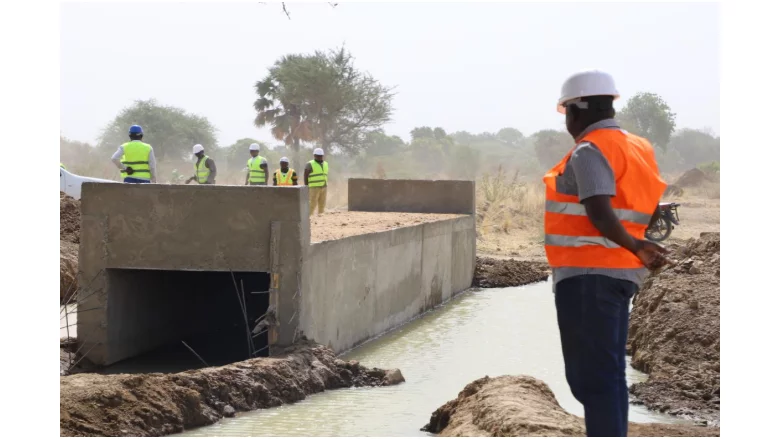
Harvesting Hope: How Communities Are Reviving the Lake Chad Region
Posted in : Blog on 24 October 2025
Achta’s story reflects a broader transformation across the Lake Chad Basin. For decades, the region has been battered by conflict and climate change. Once the sixth-largest freshwater lake in the world, Lake Chad has shrunk by nearly 90% since the 1970s.
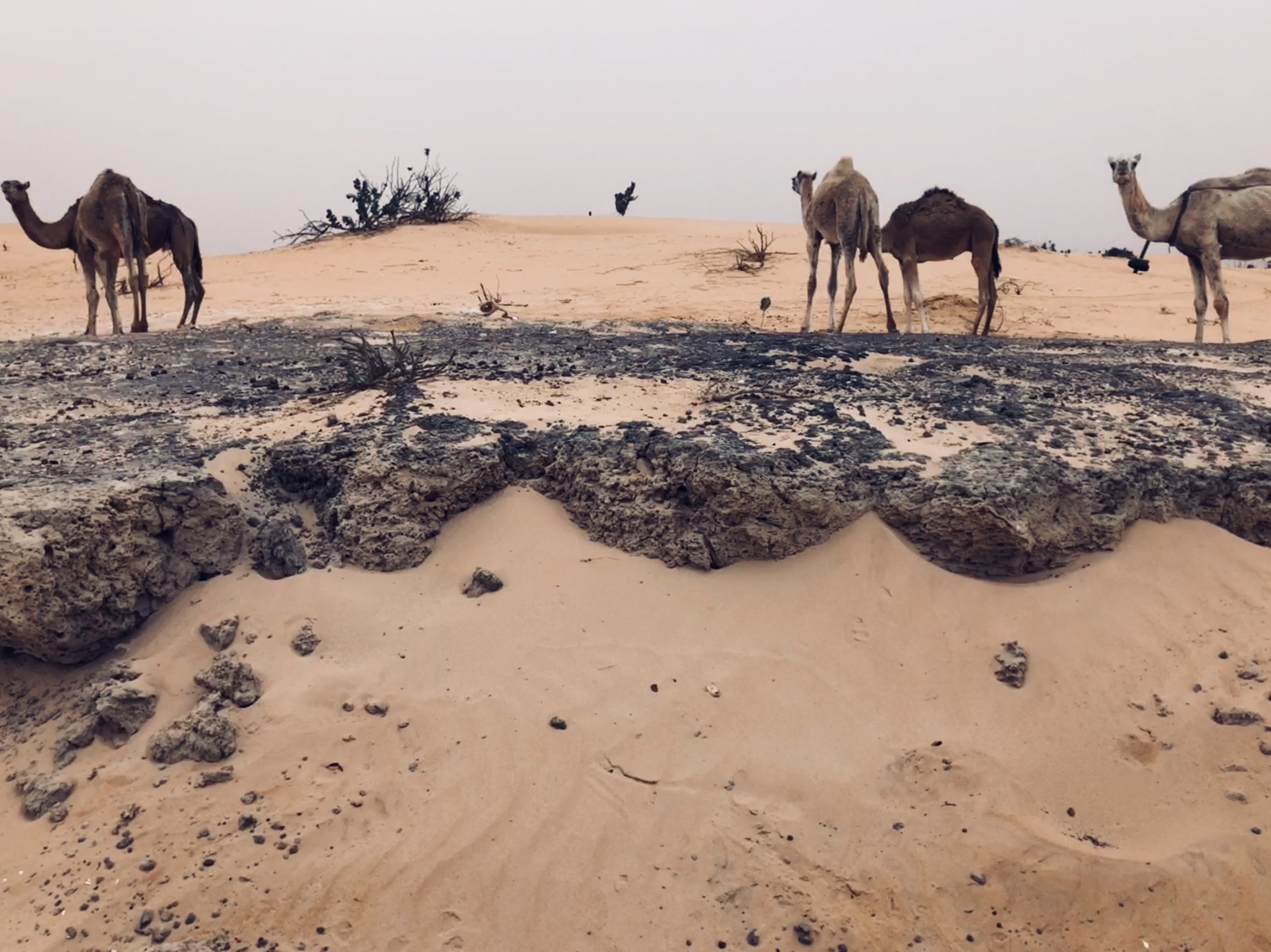
Improving Groundwater Development in the Sahel Region
Posted in : Blog on 18 April 2023
To better prepare future interventions and enhance awareness of groundwater as a key factor for water security, CIWA created the Sahel Groundwater Initiative technical assistance program.
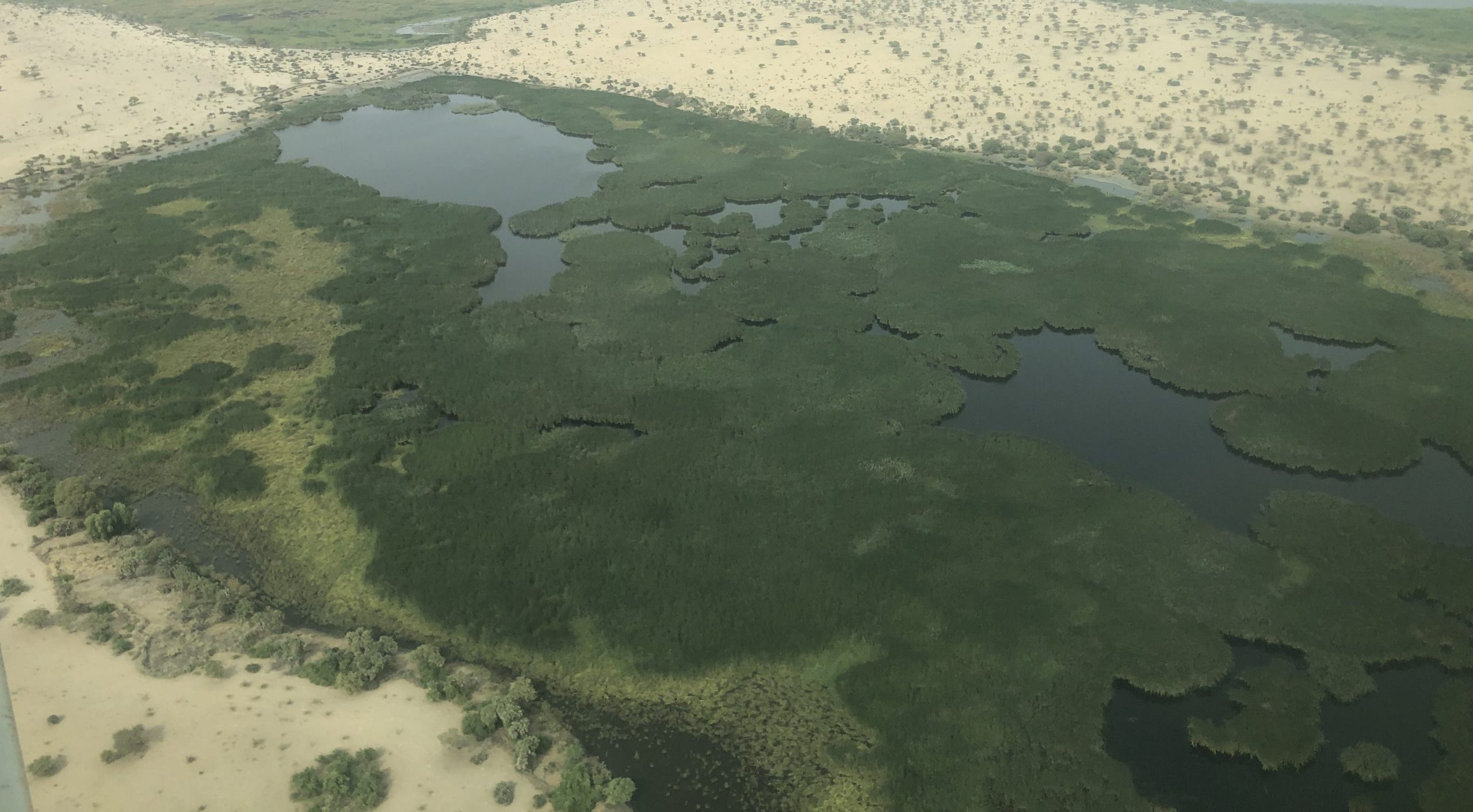
Water Security Is the Way Out of the Conflict-Climate Risk Trap in Lake Chad Basin
Posted in : Blog on 11 January 2023
CIWA is conducting a Water Security Assessment in Lake Chad basin as the first step toward developing a transformative water security framework for addressing the region’s challenges.
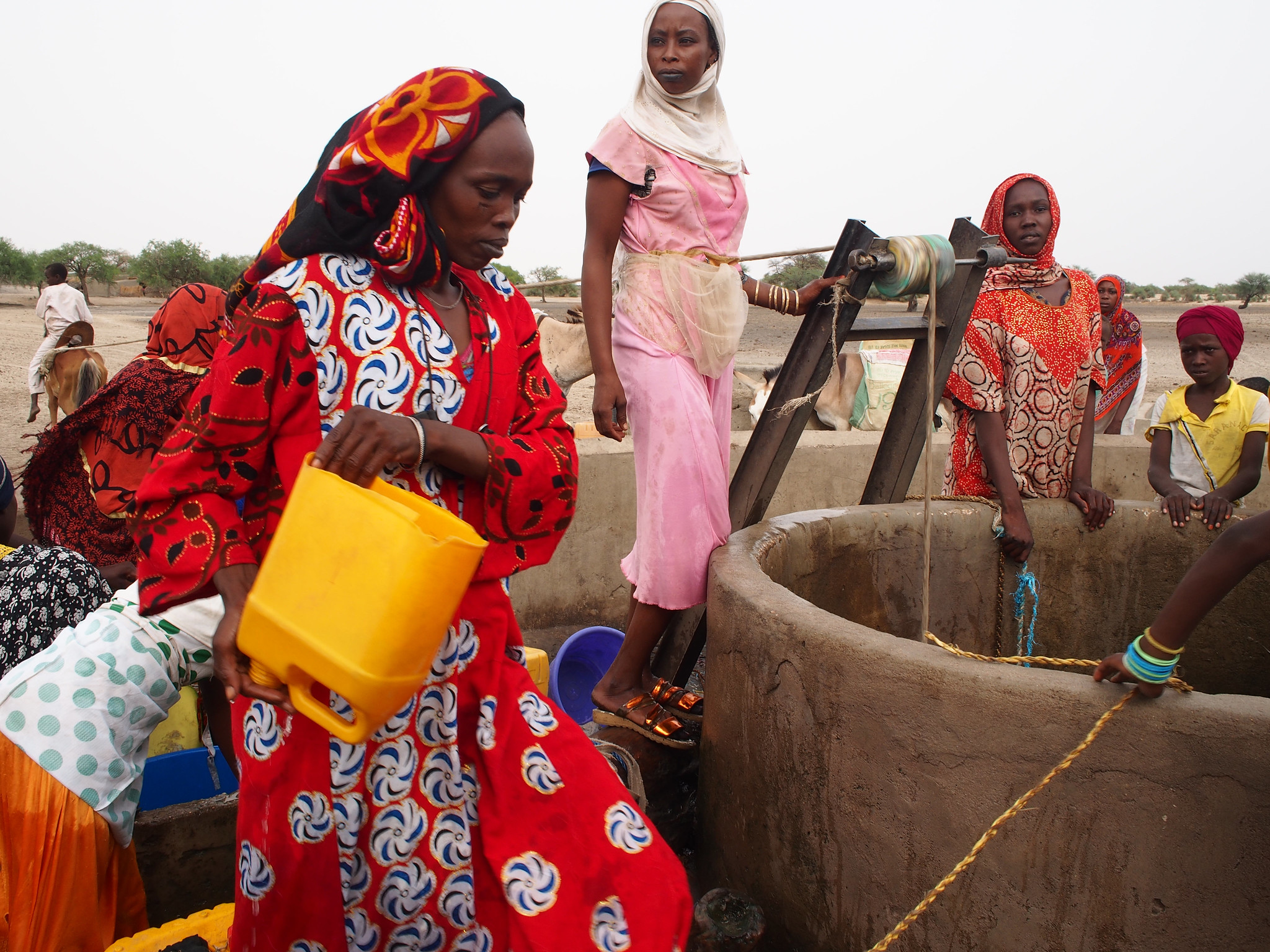
The integrated problemshed: a solution for water security in the G5 Sahel
Posted in : Blog on 3 March 2022
In the Sahel, where most bodies of water cross national borders, water is both a fundamental constraint and an integrator for development.
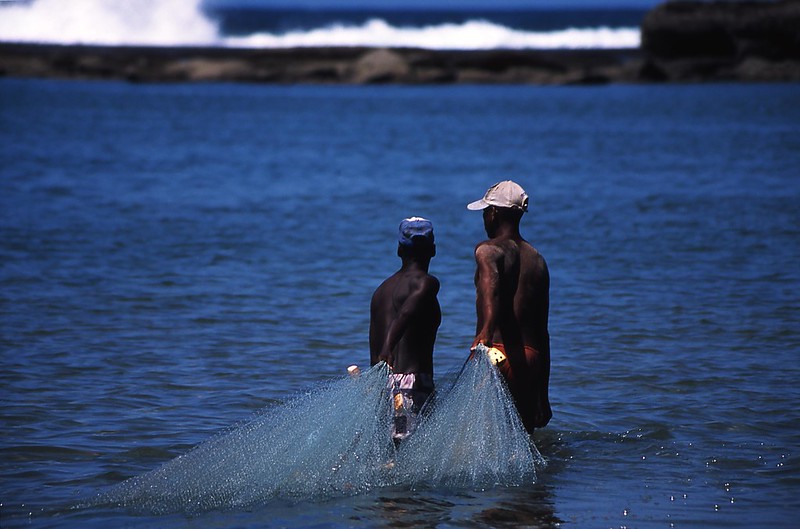
A comprehensive understanding of water resources helps manage and preserve Lake Chad
Posted in : Blog on 23 February 2021
Lake Chad is the fourth largest lake in Africa. This rich, tropical Lake with its related wetlands is shared by Cameroon, Chad, Niger, and Nigeria.
Mainstreaming Climate and Non-climatic Resilience in Water Resources and Service Delivery
This CIWA-supported technical assistance helped inform key World Bank climate and development analysis, while advancing water resilience work in Botswana, Namibia, Angola, and South Africa. The initiative, now closed, made considerable progress on resilient water investment planning, public spending reviews, and water security assessments across the region.
Context
This initiative, supported by CIWA through the Prioritizing Resilient Transboundary Infrastructure in Southern Africa Trust Fund, has now closed. Its technical assistance helped the Government of Botswana—one of the most drought-prone countries in the region—shift away from traditional planning that tries to predict a single future, toward a more rigorous, climate-resilient approach to water investment that plans for a range of possible outcomes.
The work also fed into broader World Bank climate and development analysis and supported related efforts in Namibia, Angola, and South Africa.
Progress
Water security for Gauteng, South Africa: The team completed a literature review and modeling exercise assessing how climate change could affect the Lesotho Highlands, a key water source for the Gauteng region. Both documents were shared with South Africa’s Department of Water and Sanitation for feedback.
Resilient water investment planning in Botswana: Using an approach that tests investment options against a wide range of possible future climate scenarios, the team completed an assessment of current and emerging water development opportunities for the country. Rather than betting on a single forecast, the analysis compares how different investment combinations would perform under many plausible futures—helping decision-makers choose options that hold up well regardless of how the climate actually unfolds. A workshop to share the findings with government was being planned following Botswana’s national elections.
Public spending review for agriculture and water in Namibia: A review of government spending in the agriculture and water sectors was underway, aimed at improving how efficiently and effectively public funds are targeted and used.
Water reuse and desalination policy in South Africa: An assessment of policy and institutional options for reusing wastewater and treated sludge, and for desalination, was completed. These approaches can help make water supply more resilient and sustainable by tapping non-traditional sources. Findings were presented to South Africa’s Department of Water and Sanitation, with a follow-up workshop planned for municipalities.
Nile Cooperation for Climate Resilience (NCCR)
Since 1997, CIWA has helped anchor the World Bank’s engagement in the Nile Basin — support that culminated in the Nile Cooperation for Climate Resilience (NCCR) project, a US$30 million effort that turned decades of dialogue into working tools nations use today. From flash-flood alerts trusted by Sudan’s forecasters to a shared dam safety framework now guiding four countries, NCCR shows what patient, basin-wide cooperation can build. With the project now closed, CIWA continues that legacy through the Nile Civil Society for Climate Resilience, keeping the region’s cooperative momentum alive.


NCCR was a US$30 million grant (March 2021–November 2025) supporting cooperative, climate-resilient management of the Nile Basin’s shared water resources. Building on nearly three decades of World Bank engagement in the basin, the project convened communities, policymakers, and regional institutions — including the Nile Basin Initiative’s three centers (Nile-SEC, ENTRO, NELSAP-CU), the Lake Victoria Basin Commission, and the Nile Basin Discourse — around five components: cooperation platforms, flood and drought risk mitigation, dam safety, climate-resilient data services, and water-quality planning.
Progress
NCCR delivered concrete regional tools now in use across the basin:
- Cooperation platforms: Expanded youth training programs (87 interns, 45% women) and informed three NBI governance strategies on capacity-building, communications, and gender.
- Flood and drought preparedness: Built basin-wide early-warning systems now used by Sudan (daily flash-flood bulletins), Rwanda, Kenya, Uganda, and Ethiopia to inform national planning and dam operations.
- Dam safety: Delivered a regional risk framework, model regulations, and a training center hosted by ENTRO, helping Burundi, DRC, and South Sudan establish national dam safety units for the first time.
- Data and analytics: Launched the Nile Basin Data and Analytics Service (NB-DAS), a shared platform integrating hydrological and climate data across the basin.
- Water quality: Identified four priority investment hotspots in the Lake Victoria sub-basin, now guiding the Lake Victoria Basin Commission’s five-year strategy.
- Gender: Exceeded its participation target, reaching 45% women in youth programs against a 33% goal.
Lessons Learned
- Sustained engagement preserves trust and cooperation even amid uneven political participation.
- Multi-agency, cross-thematic structuring strengthens results when coordination is strong.
- Continuity of technical teams — paired with more centralized fiduciary oversight — is critical for complex regional operations.
- Strong links between predecessor and successor projects (NCORE to NCCR) improve design quality.
- Future projects should combine perception-based indicators with real uptake measures, and address financial sustainability from the outset.
Next Steps
NBI and partners are working to convert NCCR’s outputs — including its early-warning systems and dam safety, flood, drought, and water-quality databases — into sustained regional services, despite constrained donor funding. CIWA continues its Nile Basin engagement through a new civil society program, the Nile Civil Society for Climate Resilience.
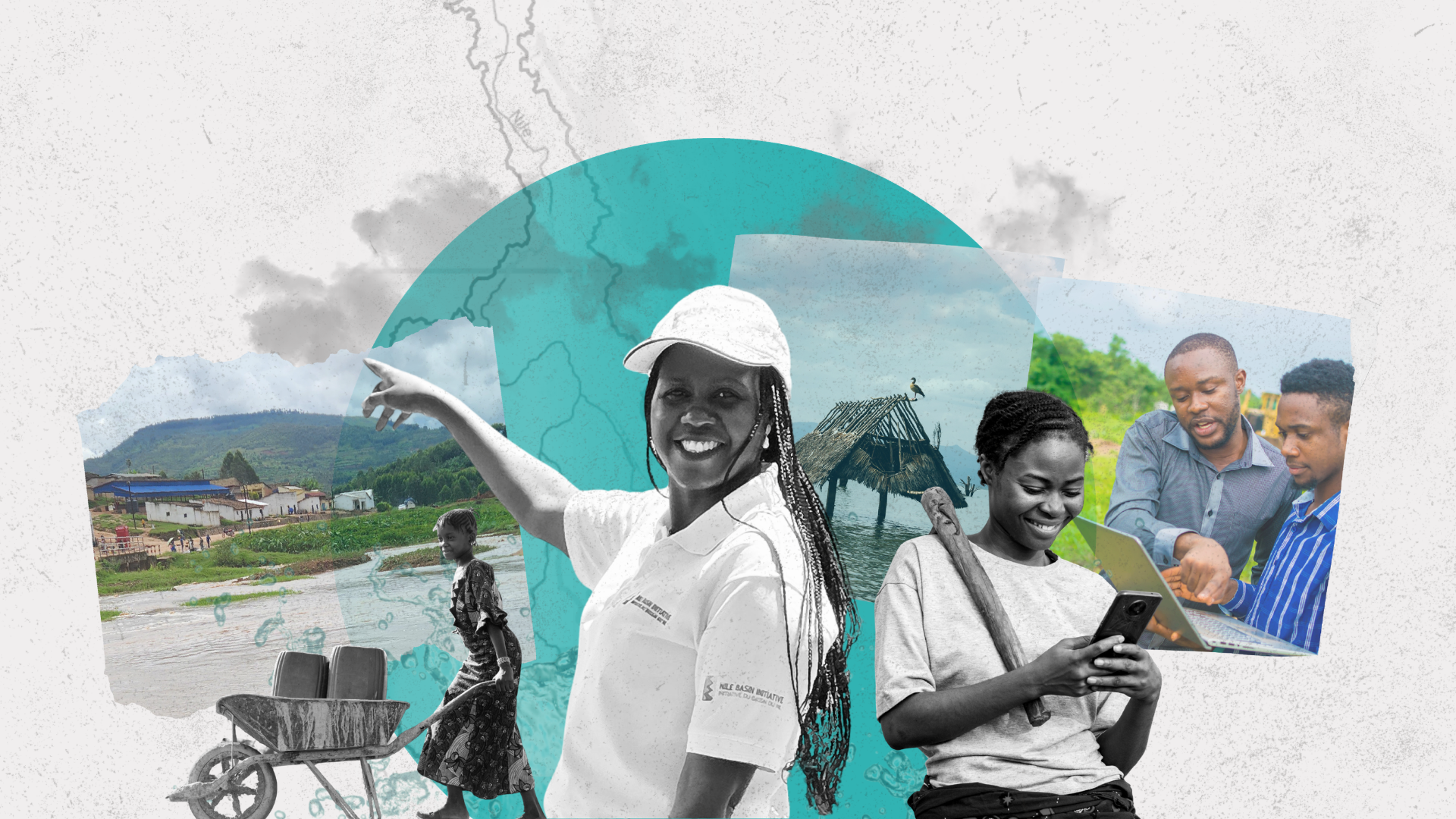
Milly Mbuliro: Protecting the Nile Basin from the fury of flash floods
Posted in : A View From The Field on 9 February 2026
Milly Mbuliro sees the impact of floods during her field work travels throughout Nile Basin countries for her job, which includes serving as the coordinator for the NELSAP transboundary component of the CIWA funded Regional Climate Resilience Project.
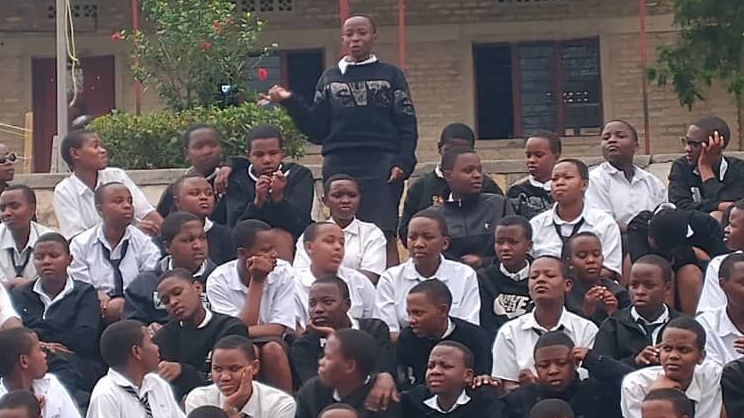
Inspiring Rwandan girls to transform water challenges into careers
Posted in : Blog on 22 November 2025
Led by NELSAP-CU and funded by the CIWA Program, a unique outreach campaign began in early June 2025, making waves in Rwanda’s secondary schools.
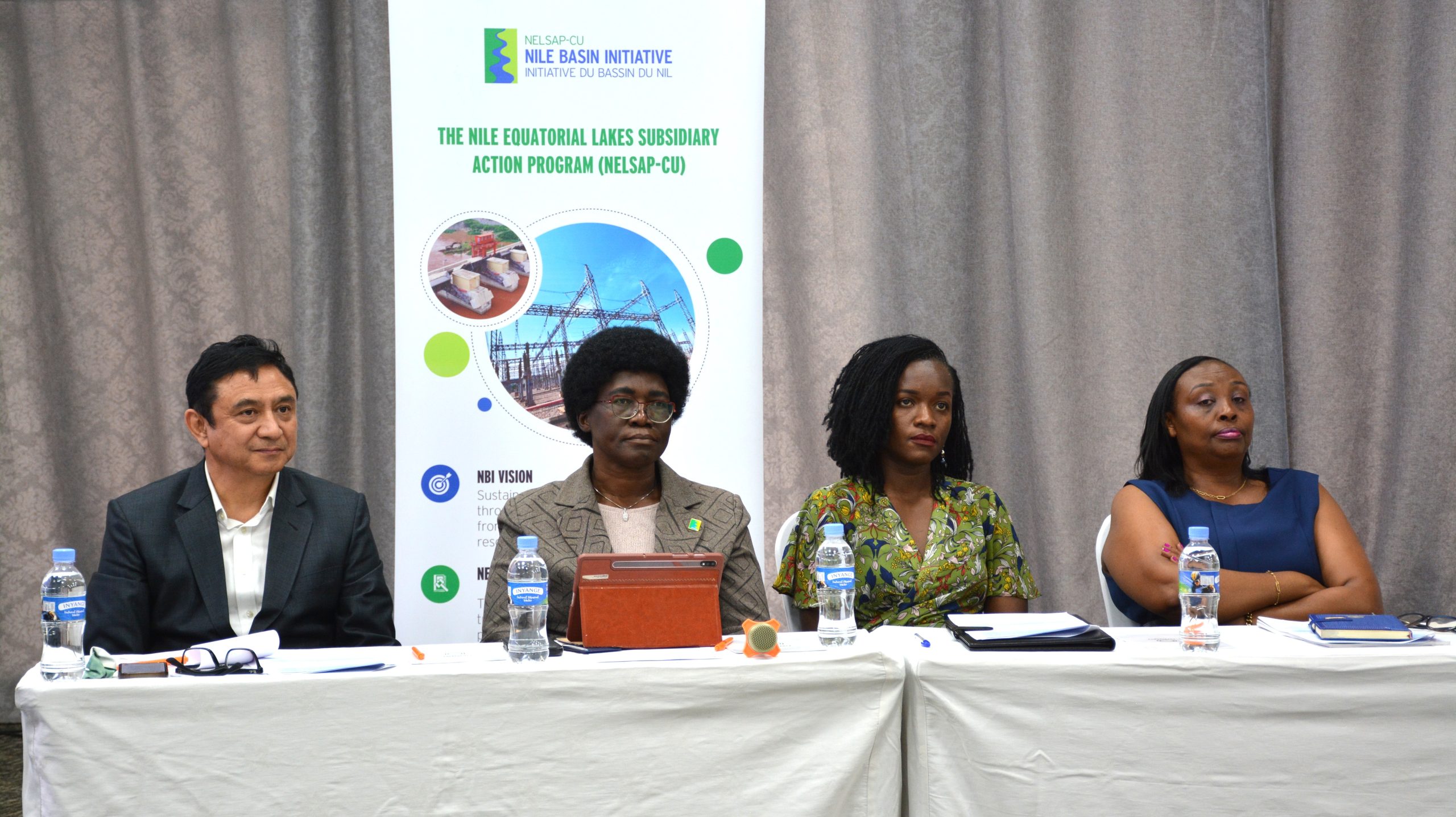
A Regional Model for Success: World Bank Praises NBI’s Nile Cooperation and Climate Resilience Project
Posted in : Blog on 23 October 2025
The Nile Basin Initiative’s (NBI) Nile Cooperation and Climate Resilience (NCCR) project, funded by the World Bank’s CIWA program, has almost concluded, significantly bolstering NBI’s capacity for climate action and transboundary water cooperation.
Southern Africa Drought Resilience Initiative
Launched in 2021 with CIWA’s support, SADRI brought a new cross-sectoral model to drought resilience across 16 SADC Member States, working across cities, energy systems, and livelihoods to help countries prepare for a threat that respects no border. From drought-risk country profiles to an outcome-oriented monitoring approach now cited as a model for other regions, SADRI turned analysis into action before closing in 2023. Its legacy lives on through CIWA’s continued drought work in the region, including the Eswatini Drought Center of Excellence.
Population growth affects river systems in terms of water use and pollution, and droughts are adding to pressures on water resources in Southern Africa. Riparian economies depend on hydropower from the Zambezi River, but high climatic variability puts significant pressure on hydropower generation, and climate change will cause an increase in evapotranspiration from higher air temperature.
This technical cooperation, which is in its second year, integrates across sectors to lay the foundation for making Southern African countries more resilient to the multiple impacts of drought. Its main objectives are to generate tools and dialogue for enhancing partnerships and capacity across the region and to inform future national and regional investments in drought resilience-building activities.
SADRI addresses cross-border drought risks, promotes cooperative management of shared natural resources, and creates an integrated vision of drought-risk management across the water-energy-food-environment (WEFE) nexus. It supports technical assistance and analytics along three pillars – cities, energy systems, and livelihoods and food security – and fills knowledge gaps, advises on transboundary drought-risk management strategies and approaches, and connects to potential investments.
SADRI produced Drought Resilience Profiles that provide a snapshot of the drought situation in each country, as evaluated through SADRI’s organizing approach, which is predicated upon the integrated drought risk management framework: 1) monitoring and early warning systems; 2) vulnerability and impact assessment; and 3) mitigation, preparedness, and response. The Profiles are meant to establish a baseline and to serve as a conversation starter for where and how to move from reactive to proactive drought management.
SADRI Drought Profiles: Angola, Botswana, Comoros, DRC, Eswatini, Lesotho, Madagascar, Malawi, Mauritius, Mozambique, Namibia, Seychelles, South Africa, Tanzania, Zambia and Zimbabwe.
The Sahel Groundwater Initiative
Launched in 2020, the CIWA-funded Sahel Groundwater Initiative tackled one of the region’s most overlooked resources — the groundwater that over 100 million Sahelians depend on as surface water grows scarcer. Working across Burkina Faso, Chad, Mali, Mauritania, Niger, and Senegal, CIWA helped identify barriers to farmer-led irrigation, strengthen groundwater science and governance, and open the field to more women hydrogeologists. Its Learning Note series distilled these findings into practical guidance, leaving a body of knowledge regional institutions continue to draw on.
Lake Chad is an essential resource for the more than 30 million people living in the surrounding countries of Chad, Cameroon, Niger, and Nigeria. Unfortunately, the basin is also home to some of the world’s highest levels of extreme poverty and ongoing conflict. The Sahel Groundwater Initiative was launched to address these issues, providing solutions to remove constraints and limitations on the use of groundwater for small-scale irrigation, reviewing the status of groundwater assessment and exploration capacity in the Western Sahel, and facilitating regional cooperation around the development of groundwater expertise in the Sahel. Through their analysis and typology of groundwater-dependent ecosystems, CIWA has identified data gaps and existing barriers to gender equality, including in access to groundwater for irrigation, groundwater management activities, and careers in the hydrogeology field.
A CIWA Learning notes series is available under the Resources section.
Great Lakes
Water Quality
Home to over a quarter of the world’s surface freshwater, Africa’s Great Lakes support more than 100 million people across ten riparian countries — yet worsening pollution threatens the livelihoods that depend on them. CIWA’s Great Lakes Water Quality technical assistance analyzed the drivers of degradation in the Lake Victoria Basin, pairing socio-economic and scientific analysis with community consultations on gender and social inclusion. That diagnostic work laid the foundation for the Nile Cooperation for Climate Resilience project, which continues to build on it to advance region-wide water quality improvement.
In East Africa, the Lake Victoria Basin suffers from rampant poverty, heavy reliance on natural resources for livelihoods, and high population density that increases pressures on land, forests, catchments, and the lake itself. Eleven countries, eight of which are landlocked, rely on the Great Lakes for food security, livelihoods, and stability. Water quality and lake management are therefore critical for supporting the socio-economic activities of the region.
To understand how poor water quality impacts people in the Lake Victoria region and to strengthen future project design and impact, CIWA’s Great Lakes Water Quality technical assistance included a broad analysis of socio-economic indicators, a review of scientific and project literature, and community consultations on gender equality and social inclusion (GESI), focusing on livelihoods. NCCR is building on this work to influence regional water quality improvement.
The CIWA’s Lake Victoria Basin Learning Notes Series gives an overview of the causes of degradation of water quality in Lake Victoria and explores potential engagement areas to improve it. Based on a World Bank study, those notes go over global and regional lake restoration lessons and the recommended long-term and multi-country strategy. Read the 4 Learning Notes:
- Improving Water Quality in Lake Victoria Basin: Social and Livelihood Development
- Improving Water Quality in Lake Victoria Basin: Sustainable Land and Water Management
- Improving Water Quality in Lake Victoria Basin: Breaking the Cycle of Climate Vulnerability
- Improving Water Quality in Lake Victoria Basin: Waste Management
Somalia Transboundary Water Resources Management
From 2018 to 2021, CIWA’s support to Somalia’s Ministry of Energy and Water Resources helped a downstream, fragile country find its voice in transboundary water dialogue for the first time. Through capacity-building, water resources modeling, and hydrogeologist training, CIWA helped Somalia articulate development options for the Juba and Shebelle basins and shape its own National Water Strategy — building the trust, data, and technical foundation needed to engage neighboring countries as an equal partner rather than through international intermediaries.

Continual reform implementation enabled Somalia to reach the first milestone in obtaining debt relief and fully re-engage with the international community in March 2020. However, an incomplete political settlement and vulnerability to shocks such as climate disasters, locust infestations, and floods are jeopardizing the country’s recovery. Somalia has the longest coastline on Africa’s mainland and a population of 15 million people. Approximately 60 percent of Somalia’s land is arid or semi-arid, with uneven and irregular availability of water resources. The Shebelle and Jubba rivers are essential sources of water for people, livestock, and irrigation.
The Somalia technical cooperation, which ended in 2021, supported the country’s requested capacity-strengthening efforts through transboundary dialogue, trust-building, and information exchange to articulate water resources development options for the Juba and Shebelle basins, structure its transboundary agenda, and pursue dialogue. It supported water resource model preparation training, development of the Somalia National Water Strategy, and expansion of stream flow and regional cloud-based data.
CIWA helped Somalia develop a framework to illustrate and discuss key sector issues and priorities with its development partners and empowered Somali water experts to express their priorities in a context where agenda-setting and implementation have typically resided with international agencies and NGOs.
CIWA supported the development of a Water Resources Model to build the capacity of water sector institutions and train selected hydrogeologists on water resources modelling. CIWA has trained a dozen Somalian hydrologists on the streamflow model for the Shebelle and Juba rivers to help visualize the fluctuation of flow through time.