



Rwanda: Empowering Communities for Climate Resilience in Makera Watershed
Posted in : Blog on 2 February 2026
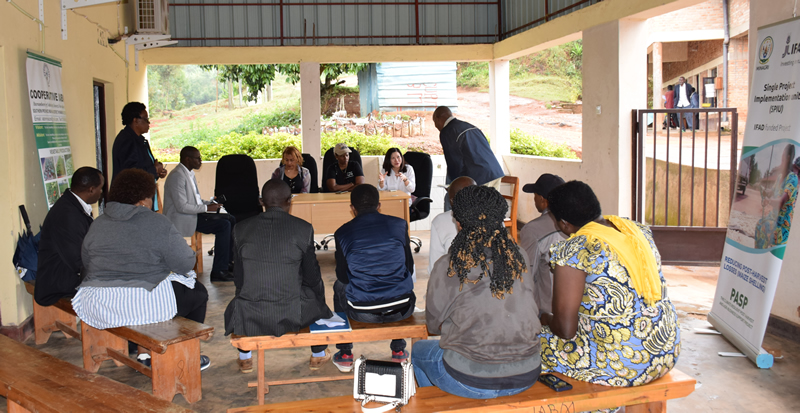
Ms. Uzamukunda y’Ukunda, President of the IABM Cooperative briefing delegation on how the cooperative empowers local farmers and drives community impact.
For water resources management to be effective, genuine community engagement is essential.
That is the premise behind a new program, the Nile Civil Society for Climate Resilience (NCSCR), which was created in 2025 by the World Bank’s Cooperation in International Waters in Africa program in partnership with the civil society organization Nile Basin Discourse (NBD). The two-and-a-half year grant to the NBD will provide a platform for citizen engagement in basin water investment decisions and riparian dialogue, learning on climate risk-management and resilience-building strategies, and promotion of the benefits of cooperation. It includes working with communities to generate citizen data on water and climate change impacts to inform national and transboundary policies.
CIWA held its first Implementation Support Mission for the project in October 2025 in Kigali, Rwanda, where the NBD showcased how its regional learning, capacity building, and partnerships are transforming livelihoods in communities. A field visit to Rwanda’s Muhanga District offered firsthand insights into the tangible results of NBD’s work through its member networks. The field visit was designed to showcase NBD’s community-level impact, particularly on how NBD’s work in capacity building, knowledge sharing, and partnerships translate into tangible livelihoods improvement for local communities.
Making an impact: the SDHA and IABM Cooperative
At the center of the Muhanga field visit was the work of the Sustainable Development & Humanitarian Action (SDHA), a civil society organization and member of the Rwanda National Discourse Forum, the national forum for NBD members in Rwanda. SDHA is committed to strengthening community-based climate resilience and promoting sustainable livelihoods, goals that are closely aligned with NBD’s mission across the Nile Basin.
Over the years, the SDHA has benefited from NBD-led capacity-building programs, peer learning exchanges, and experience-sharing platforms. Leveraging the skills and knowledge gained through these engagements, the SDHA is supporting the Iterambere ry’Abahinzi Borozi Ba Makera (IABM) cooperative, a community-based group of more than 1,600 smallholder farmers in the Makera Watershed of Muhanga District.
The SDHA is providing the cooperative sustainable agriculture extension services, mentorship, and technical guidance in value chain development. These interventions aim to improve food security, build climate resilience, and increase the income and capacity of small-scale farmers.
One of the most significant outcomes of SDHA’s work in partnership with Muhanga District was the completion of a feasibility study that explored the relationship between climate change and food insecurity among smallholder farmers in the Makera watershed area. The study offered in-depth analysis and strategic recommendations to increase resilience and reduce vulnerability to climate change.
As a result of this evidence-based engagement, the Government of Rwanda allocated 200 hectares of marshland in Makera to the IABM cooperative for sustainable agriculture, providing secure access to resources and enabling long-term planning for food production and income generation.
Improving livelihoods, access to markets, and climate resilience
The impact of SDHA’s work is already visible. Today, IABM members are involved in the production of hybrid maize seeds, vegetable farming, and grain processing. During the site visit, the delegation gained insights into the maize milling process, including cleaning, processing, and packaging.
A portion of their produce is now being exported through the National Agricultural Export Development Board, connecting smallholder farmers to national and international markets. As a result of these efforts, incomes for over 1,000 cooperative members have doubled, farmers now have better access to training and technical support, and the cooperative’s organizational capacity and collective action have been significantly strengthened.
To ensure long-term sustainability, the SDHA is working with the Rwanda National Discourse Forum to support the cooperative in developing a strategic plan to scale IABM’s impact.
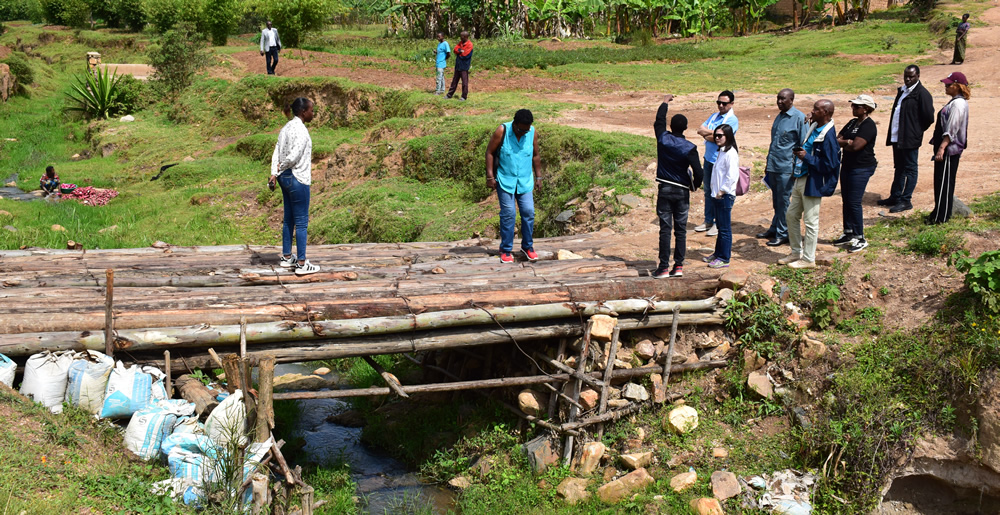
The delegation interacted with IABM members during the field visit, focusing on local innovations that help communities adapt to the impacts of climate change. These included soil conservation techniques, small-scale irrigation systems, rainwater harvesting, and other climate-smart agriculture practices. These practical solutions are improving resilience and livelihoods while showcasing the power of community-driven action backed by technical support and policy engagement.
The NBD implementation model
The field visit demonstrated the NBD’s multi-level operational structure, from its Regional Secretariat, through national-level platforms such as NBDF Rwanda, and down to grassroots implementation through member organizations such as SDHA.
The delegation visited the NBDF Rwanda offices, hosted by SDHA, for an engaging exchange on ongoing initiatives.
The CIWA team praised the effectiveness and relevance of this structure and expressed appreciation for the collaboration and interdependence between the NBD Secretariat, National Discourse Forums, and member organizations.
This story was originally published on the Nile Basin Discourse (NBD) website and is republished here with permission.