


When Women Lead, Water Futures Change
Posted in : Blog on 9 March 2026
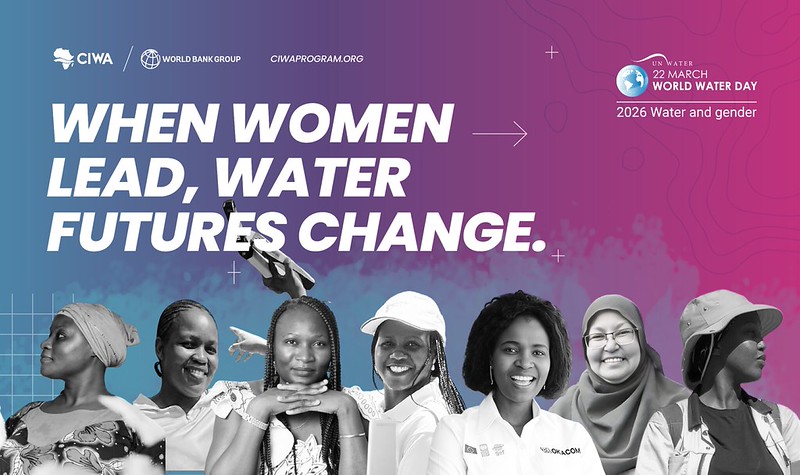
The International Women’s Day 2026 theme of “give to gain” underscores a global truth: when women have access to skills, opportunities, and quality jobs, economies grow and communities become more resilient. Across Africa’s shared waters, this message strongly aligns with the World Bank’s renewed focus on jobs as the pathway to development—and with how the Bank’s Cooperation in International Waters in Africa (CIWA) program is investing in people and livelihoods.
Through CIWA-supported initiatives, women are not only protecting rivers, groundwater, and ecosystems—they are creating jobs, strengthening livelihoods, and building careers in some of the most climate-vulnerable regions of the continent. Moreover, for women who work in water institutions, CIWA’s initiatives on gender equality are helping pave the way for more women to enter the field and overcome barriers that impede their advancement into leadership roles.
Six women across Africa show how investing in women’s skills translates into employment, leadership, and long-term economic impact.
Igbal Saleh: Calming Conflict through Groundwater Resilience (Horn of Africa)
In regions where water scarcity fuels tension, groundwater cooperation can be a powerful tool for peace—and jobs. Through CIWA-supported work on groundwater resilience, Igbal Saleh, a hydrologist at the Intergovernmental Authority on Development (IGAD), has helped strengthen technical capacity and dialogue around shared aquifers, supporting smarter water use across borders. She is also a role model for younger female hydrologists.
By improving data, coordination, and long-term planning, her work helps reduce conflict risks while creating demand for skilled professionals in hydrogeology, monitoring, and water governance—including for women professionals who are often marginalized and overlooked. Female hydrologists in Africa face a complex set of professional, social, and cultural barriers that limit their participation and advancement in the water sector, including being significantly underrepresented in technical and leadership roles.
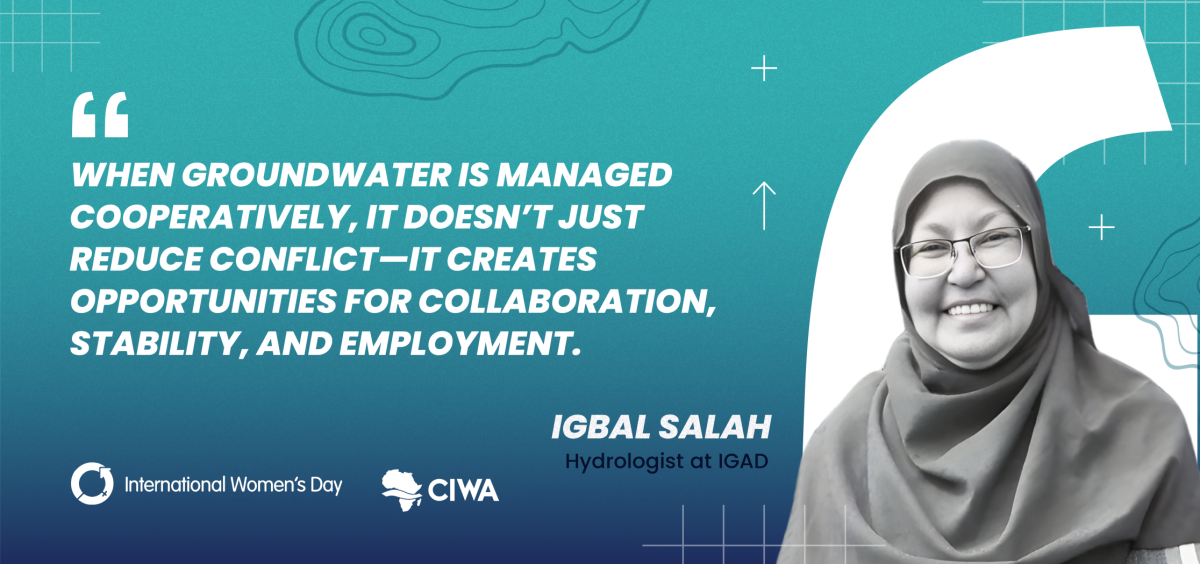
Saleh’s experience shows how investing in technical skills for shared groundwater management supports both peace building and sustainable livelihoods, especially for women.
Mmasechaba Lebogang Moropane: Building a Career in Environmental Science (South Africa)
In South Africa’s Western Cape, graduate student Mmasechaba Lebogang Moropane is using satellite data to study how invasive plant species drain groundwater resources. With CIWA-supported research opportunities, she is generating evidence that helps policymakers protect fragile ecosystems and water supplies. And, in the process, she is learning invaluable skills that will enhance her career.
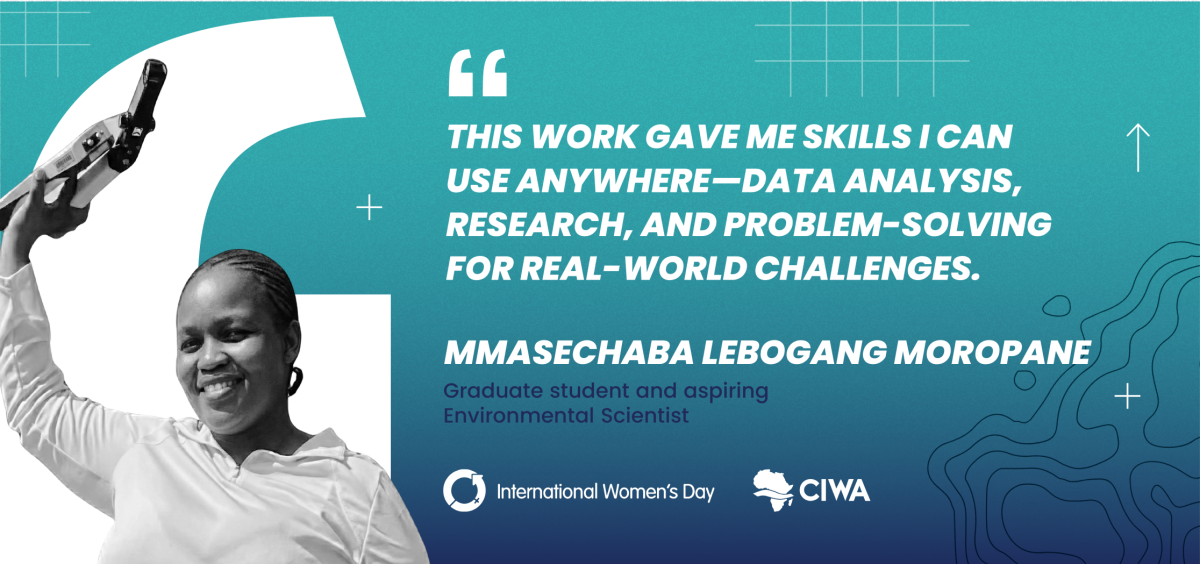
Moropane, who has an undergraduate degree in environmental and water sciences, also knows that she will be a role model for other girls looking to enter this male-dominated field. Girls face cultural and financial barriers to entering college, especially in science, technology, engineering, and mathematics (STEM) majors. And those who do graduate with a degree in a STEM field often have a hard time finding employment and advancing in their careers.
Her journey shows how technical training creates pathways into science-based jobs that support sustainable development.
Tracy Molefi: Strengthening Institutions, Sustaining Jobs (Cubango–Okavango Basin)
For Tracy Molefi, water cooperation is inseparable from people’s livelihoods. Working with the Permanent Okavango River Basin Commission (OKACOM), she helps ensure that conservation efforts go hand in hand with climate-resilient development for the communities that depend on the river.
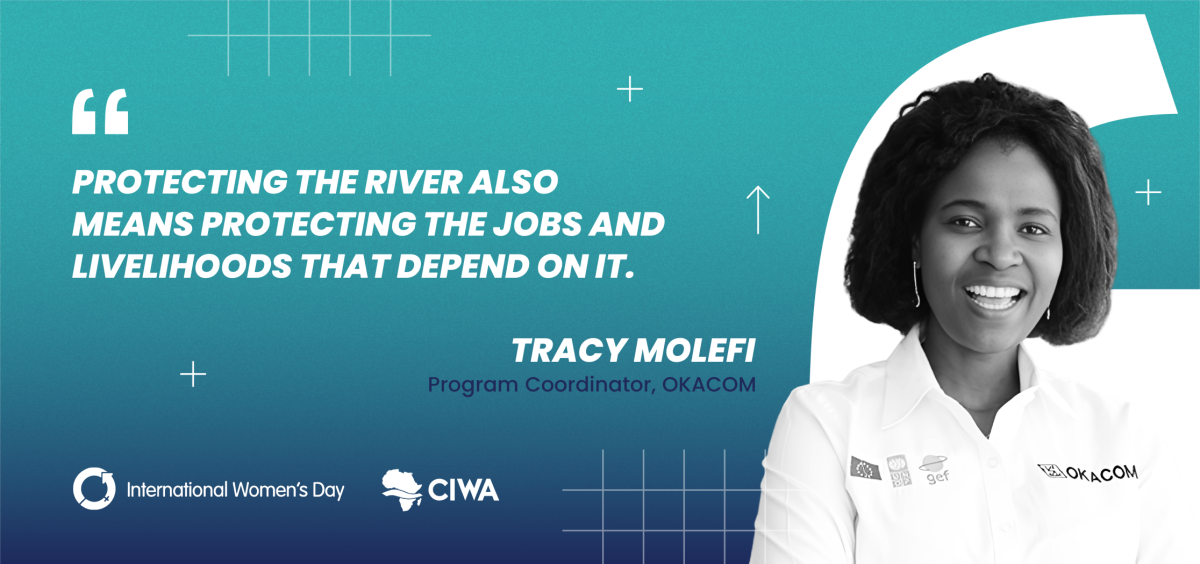
OKACOM, which is supported by CIWA, is also taking concrete action aimed at promoting gender equality and the empowerment of women and other vulnerable groups, in keeping with its Gender Mainstreaming Strategy and Implementation Plan.
CIWA-backed institutional capacity development for OKACOM helps ensure water systems that support inclusive economic growth and livelihoods.
🌱 Achta: Harvesting Hope in the Lake Chad Region
In a region long shaped by drought and instability, Achta, a farmer and member of a women’s producer group, is part of a quiet transformation. Through CIWA-supported land restoration efforts, women farmers are reclaiming degraded land, restoring productivity, and rebuilding local markets.
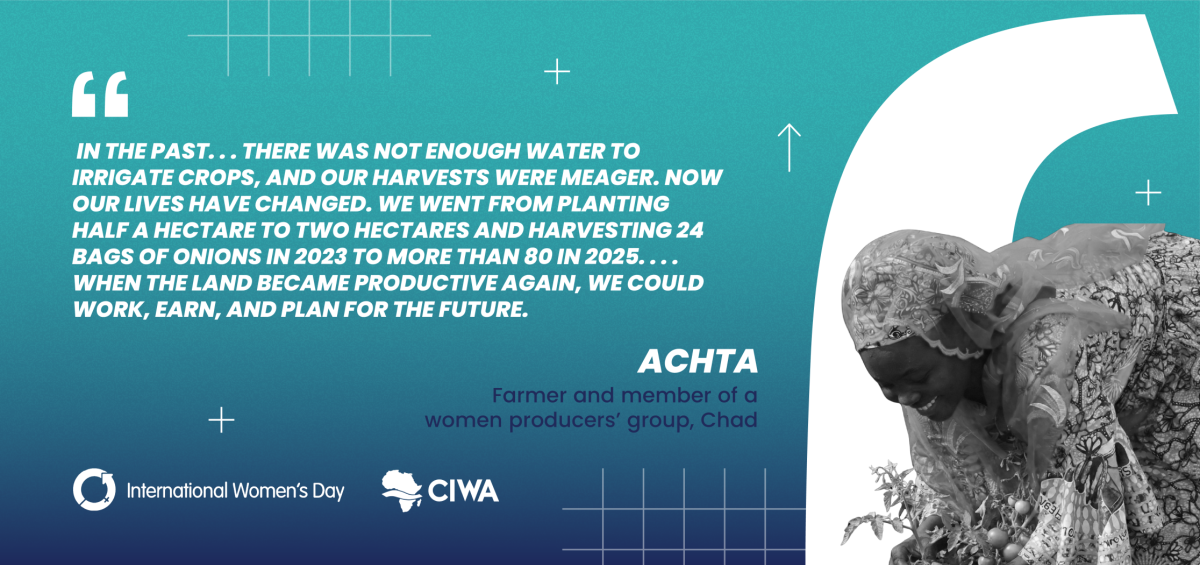
Her story is a reminder that climate resilience begins with people—especially women on the frontlines.
Link to story on CIWA website
Gloria Musopole: Skills that Travel across Borders (Southern Africa)
For Gloria Musopole, participating in the CIWA-supported SADC-GMI Winter School was about more than gaining technical knowledge. It was also about learning practical skills and joining professional networks that strengthen her employability and leadership potential, especially important as a woman in a male-dominated field.
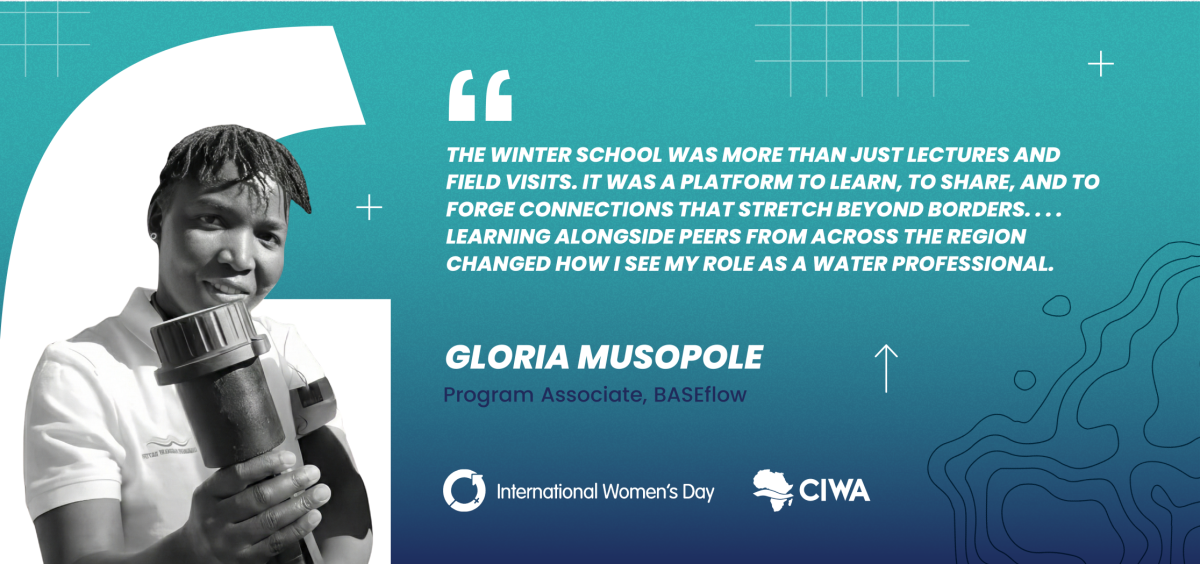
Capacity building for women today becomes leadership by women tomorrow.
🚀 Ilca Nhandamo: The value of Education for Young Women (Mozambique)
Ilca Nhandamo graduated with a master’s degree in engineering and water resources management from Zambezi University, learning valuable skills that will allow her to step confidently into leadership.
Her story shows the power of sustained investment in young professionals. CIWA-enabled opportunities allowed her to present research internationally and connect with mentors. Now she is planning her career including assuming leadership roles.
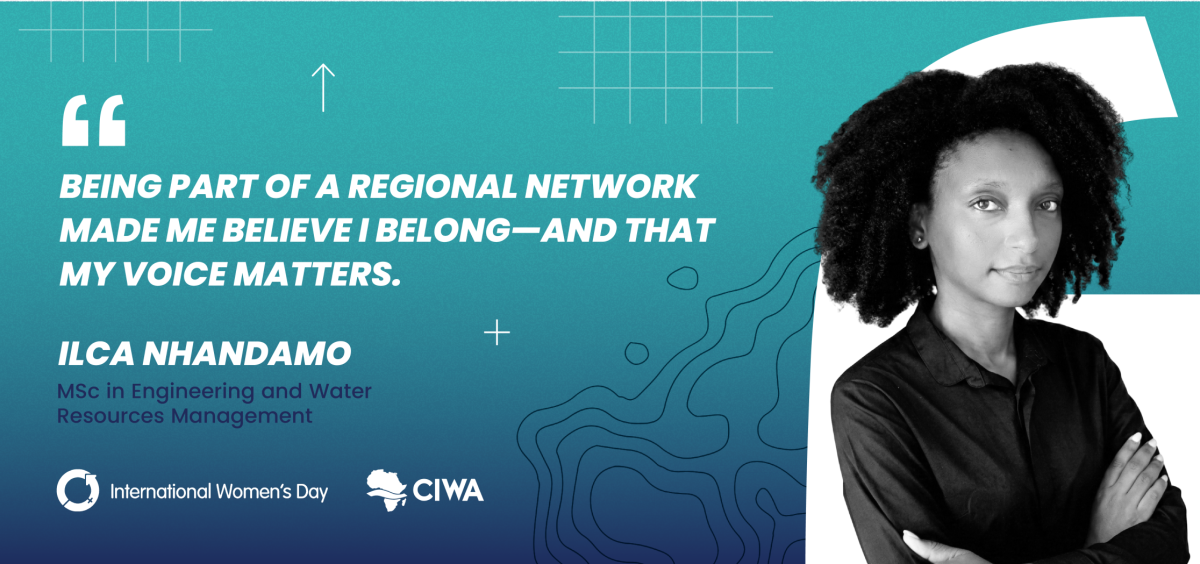
Her path reflects CIWA’s commitment to nurturing future leaders including women in water governance.
Why these Stories Matter – Why Water Jobs for Women Matter
These women are not exceptions—they are evidence. Evidence that when women receive equitable access to education, financing, and networks, they deliver solutions that are innovative, inclusive, and enduring.
Water security is not only an environmental challenge—it is a jobs challenge. Across Africa, tens of millions of livelihoods depend on healthy rivers, sustainable groundwater systems, and climate-resilient water management. By investing in women’s skills, careers, and leadership, CIWA is helping ensure that water cooperation delivers employment; stability; long-term economic growth; and equitable, inclusive, and sustainable development.
As we mark International Women’s Day 2026, CIWA’s work is aligned with the Women’s Day message of giving to gain: educating and empowering women in water fields is not only a matter of equity—it is essential to creating resilient ecosystems, secure livelihoods, and shared prosperity across Africa.
When women have jobs, communities thrive—and water futures are secured. When women lead, water cooperation thrives.