




What Happens Underground When the Rains Fail: Climate Change and Groundwater in the Horn of Africa
Posted in : Blog on 1 March 2026
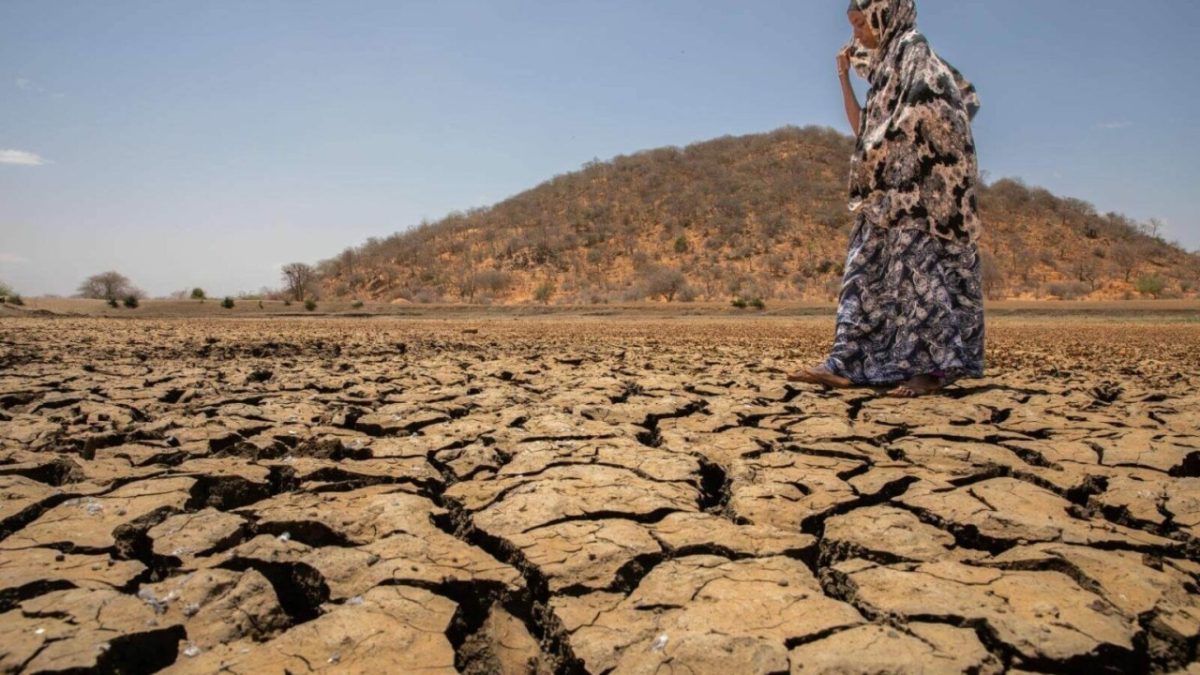
We have spent decades talking about drought in the Horn of Africa in terms of what we can see: dried riverbeds, dead livestock, cracked soil. It is time to talk about what is happening below the surface.
The Horn of Africa is in the middle of one of the most dramatic long-term shifts in its climate in recorded history. A 2023 study by the Kenya Meteorological Department and Imperial College London concluded that climate change has made extreme drought events, like the 2020 to 2023 drought that devastated the region over five consecutive failed rainy seasons, approximately 100 times more likely than they would have been in a pre-industrial climate. That finding alone should be alarming. But it is only part of the story.
Climate change does not just reduce rainfall. It changes the entire water cycle in ways that cascade down through rivers, wetlands, soils and ultimately into the aquifers that millions of people and their livestock depend on. The Horn of Africa Groundwater for Resilience programme (HoAGW4RP), funded by the World Bank and CIWA, is currently undertaking one of the most ambitious attempts yet to understand and respond to those cascading impacts. What it is finding should reshape how we think about water security in the region.
Temperature, Evaporation and the Invisible Loss
When temperatures rise, water evaporates faster. The Horn of Africa has warmed by approximately 1.5°C over the past fifty years, with warming accelerating since 2000 (Gebrechorkos et al., 2019, Journal of Climate). The practical consequence for groundwater is direct: a larger proportion of the rainfall that does reach the ground evaporates before it can percolate down to recharge aquifers. At the same time, rising temperatures increase the water demands of vegetation, meaning that more rainfall is taken up by plants rather than seeping into the soil.
The result is that even in years where rainfall totals appear adequate, effective groundwater recharge, the amount of water that actually reaches the aquifer, may be declining. A 2020 study published by the British Geological Survey (MacDonald et al., 2020, BGS dataset), which mapped groundwater recharge across Africa from ground-based measurements, found enormous variability in recharge rates across the Horn of Africa region, with the most vulnerable systems concentrated precisely in the shallow aquifers that pastoral communities depend on most.
The Shallow Aquifer Problem
This is the detail that rarely surfaces in drought coverage. There are two broad categories of groundwater in the Horn of Africa: deep, confined aquifer systems that hold ancient water accumulated over thousands of years, and shallow, unconfined aquifers that are recharged by recent rainfall and seasonal floods. The deep systems, including the trans-boundary Merti, Dawa, and Shebelle aquifers that cross the borders of Kenya, Ethiopia, and Somalia, are relatively insulated from short-term climate variability. The shallow systems are not.
Rural pastoral communities, almost without exception, depend on shallow groundwater: hand-dug wells, shallow boreholes, and the localised perched aquifers found in natural landscape depressions and along ephemeral stream channels. These are precisely the systems most exposed to the combined effects of reduced recharge, higher evaporation, and longer dry periods between rainfall events.
A 2019 study published in Nature (Cuthbert et al., Nature, 572, 2019) that analysed groundwater resilience to climate variability across sub-Saharan Africa found that shallow, unconfined aquifers are significantly more sensitive to inter-annual rainfall variability than deeper systems, and that in semi-arid environments, consecutive years of below-average rainfall can progressively deplete shallow groundwater levels in ways that take multiple good rainfall years to reverse. For communities already living through droughts of unprecedented frequency and severity, that lag in recovery is the difference between resilience and collapse.
Recharge is Happening, But in Fewer Places
There is a finding from the HoAGW4RP’s hydro-geological work in the Horn of Africa that is both promising and deeply important at the same time: groundwater recharge is not uniformly declining. In some locations, the intensification of rainfall events, where the same annual total falls in fewer, heavier downpours, is actually increasing localised recharge. When a large volume of water arrives quickly, it can overwhelm surface runoff and percolate into shallow aquifers faster than it evaporates.
The critical word here is localised. This recharge is not happening evenly across the landscape. It is concentrated in specific features: ephemeral river channels and natural depressions in the land surface where floodwater pools and slowly seeps downward. In the Somali region of Ethiopia and across the rangelands of northeast Kenya, these depressions, known as ‘balli’ in Somali, have supported pastoral communities for generations. They are some of the most important and least protected groundwater recharge zones in the region.
The World Bank’s 2023 publication, ‘The Hidden Wealth of Nations: The Economics of Groundwater in Times of Climate Change,’ identified recharge zone protection as among the highest-return water security investments available globally, yet found it to be among the least funded and least recognised in development planning. In the Horn of Africa, these recharge zones are being degraded through settlement, livestock concentration and land clearance, precisely as they are becoming more critical.
The recharge zones we most depend on are the ones we are most at risk of losing.
Building a Regional Picture Together
One of the most significant opportunities the HoAGW4RP is helping to unlock is a more comprehensive regional picture of how climate change is affecting groundwater recharge across the borderlands of Ethiopia, Kenya and Somalia. Like most dry-land regions globally, the Horn of Africa faces a genuine technical challenge: groundwater systems are vast, complex and costly to monitor, and building the data infrastructure to understand them at a regional scale takes time, sustained investment, and cross-border collaboration that no single country can achieve on its own.
Groundwater monitoring in the Horn of Africa has historically been conducted at the national level, with each country developing its own methodologies, datasets and planning frameworks. The trans-boundary aquifers that cross these borders have therefore been understood only in parts, each national agency holding a piece of a larger puzzle. This is not a failure of will or capacity, it is a structural challenge that reflects the broader global reality: a 2022 report by the Groundwater Assessment Platform (GAP) and the International Groundwater Resources Assessment Centre (IGRAC) found that building comprehensive national groundwater monitoring networks is a long-term endeavour that most countries in sub-Saharan Africa are still in the process of developing.
The HoAGW4RP is helping accelerate that process through a Joint Regional Study (JRS), jointly implemented by the IGAD Groundwater Centre and the national groundwater agencies of Ethiopia, Kenya and Somalia. The JRS is developing a harmonised methodology to assess groundwater recharge annually at a regional scale, drawing on remotely sensed data to complement and extend available ground measurements. Once validated, this approach will provide a shared regional monitoring platform enabling joint drought preparedness planning across borders, an important step forward that builds on each country’s existing work and brings it together into a coherent regional picture.
If the methodology proves transferable, it offers a valuable model for how regional collaboration can accelerate groundwater knowledge-building in other parts of the continent facing similar challenges.
The Connection to People’s Lives
None of this is abstract. A 2020 study published in Nature Communications (MacAllister et al., Nature Communications, 11, 2020) compared the performance of rural water supplies across sub-Saharan Africa during the 2015 to 2017 drought and found that groundwater-based water supplies were significantly more likely to maintain continuous service than surface water-dependent systems. Groundwater is not just a resource. It is a humanitarian buffer that keeps children in school, livestock alive and families from displacement during the crises that climate change is making more frequent.
But that buffer only works if the aquifers are being recharged, if the recharge zones are being protected and if the infrastructure accessing groundwater is functional and well-governed. The climate science is clear. The hydrogeology is becoming clearer. The harder work, of translating that knowledge into protected landscapes, well-maintained water points and equitable governance, is only just beginning.
Groundwater is not just a resource. It is a humanitarian buffer that keeps children in school, livestock alive, and families from displacement during the crises that climate change is making more frequent.
The HoAGW4RP is funded by the World Bank and CIWA (Cooperation in International Waters in Africa) and implemented across Ethiopia, Kenya and Somalia in partnership with IGAD.
Horn of Africa Groundwater for Resilience Project State Department for Water and Sanitation
Learn more
Key Sources Referenced
Kimutai et al. (2023), Kenya Meteorological Department and Imperial College London, on climate attribution for Horn of Africa droughts.
Gebrechorkos et al. (2019), Journal of Climate, on long-term temperature trends in the Horn of Africa.
MacDonald et al. (2020), British Geological Survey, groundwater recharge dataset for Africa.
Cuthbert et al. (2019), Nature 572, on groundwater resilience to climate variability in sub-Saharan Africa.
MacAllister et al. (2020), Nature Communications 11, on rural water supply performance during drought.
World Bank (2023), ‘The Hidden Wealth of Nations: The Economics of Groundwater in Times of Climate Change.’
IGRAC and GAP (2022), Transboundary Aquifers of the World: Monitoring Report.
GW4R Programme Newsletter, Edition 2, November 2024, Marcus Wijnen on climate change and groundwater in the Horn of Africa.