


Why Male Allyship Still Matters in 2026: Inside CIWA’s Gender Training
Posted in : Blog on 29 January 2026
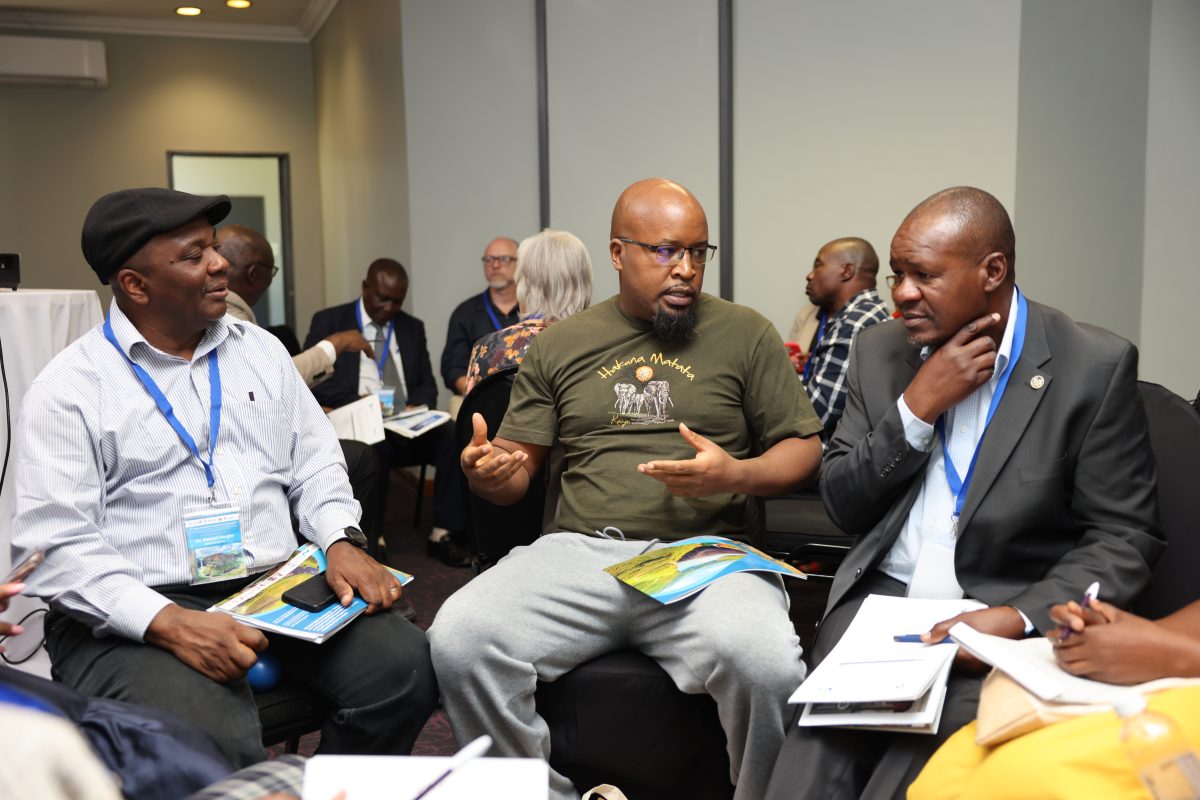
Since its inception in 2023, 28 men have joined the Male Champions for Women’s Empowerment, an initiative begun by the World Bank’s Cooperation in International Waters in Africa program to create a collective space for men committed to gender equality. A key objective of the initiative is to enable men to play a central role in creating a favorable environment for women to become leaders within the transboundary water sector. One way to do that is by strengthening the capacity of Male Champions to promote gender equality.
CIWA continues journey toward gender equality
Last year, CIWA welcomed seven new Male Champions to its initiative. As part of their induction, CIWA hosted a two-day online gender equality and social inclusion training in January 2026. The training was designed and facilitated to enable Male Champions to learn about gender equality concepts and practices and be introduced to the approach and expectations of the initiative.
The sessions encouraged participants to reflect on what motivated them to become a Male Champion. Enock Kiminta, Chief Executive Officer of the Kenya National Association of Water Resources Users Associations, told participants he joined because he wants to be part of a movement to change the way women are treated: “I see inequality hurts everyone including men. I go to some online forums and see men discussing issues but there are hardly any women. When I asked the men, ‘where are the women?,’ they told me they were out fetching water, which really set me off to want to make a change.” (Fetching water for the household is women’s traditional role.)
Thato Konstable, a community development professional who works for the Malibamatso Youth Initiative at the Lesotho Highlands Water Project, said that his greatest motivation to become a Male Champion was to learn from other Champions. He is working on water projects that are engaging women. “We are now at the phase of construction and it’s great to see women and girls operating the machines. Knowing that I have a daughter inspires me when I see this positive change.”
Male resistance to women’s participation
During the session to consider challenges to women’s participation, Male Champions were asked why they think women are reluctant to participate. Some responded by sharing their observations of what’s happening in their own workplace. Pinnie Sithole, Program Officer, Global Water Partnership, Southern Africa, said that “women don’t feel the environment is safe. They fear retribution once they speak out.” Konstabole noted, “Women think that men are resistant and don’t accept their technical input.” Other challenges cited included perceptions that women are unable to do technical or modeling activities. When reflecting on women’s role as child bearers, everyone agreed that women leave the water sector because they believe not enough has been done to make their workplaces family friendly. When discussing issues of male resistance, Abel Sibanda, Program Officer at ActionAid Zimbabwe, helped other Male Champions understand how difficult it can be to stand up to men when promoting gender equality. “I have worked on issues of gender and often face resistance from men. This includes being labeled as betraying men.” He has learned about the importance of being deliberate and intentional in coming up with ways to deal with the resistance.
Dereje Gebremichael offered a strategic approach that he has been applying within his own workplace as a staff member at the Ethiopian Orthodox Church Development and Inter-Church Aid Commission. His approach connects directly to the mandate of the Male Champions for Women’s Empowerment. “If we always work with dividers and resistors, it won’t work. We need to focus on connectors to get results.” To do so, Gebremichael says he works with allies to undertake three key activities: “I work with others to advocate for gender equality, empower through coaching and mentoring, and partner with other gender justice and human rights organizations to fight against injustices towardwomen.”
Individual Male Champions are also taking the lead to undertake capacity-building activities. On March 5, 2026, Gebremichael will co-host awebinar with the Ministry of Water and Energy in Ethiopia to explore how the Ministry integrates a gender-transformative approach to promote equality and women’s leadership. Konstable will follow up mid-year with an event focused on how he works with others to facilitate the vital role of women in the construction sector associated with the Lesotho Highlands Water Project. Several Male Champions have also drafted blogs as part of a Male Champion Blog Series on CIWA LinkedIn networking platform to reflect their experiences and lessons learned working to promote women’s empowerment in the water sector.