


Women at the Helm: A Month of Celebration and Reflection
Posted in : Blog on 26 March 2026
March is a month of global observances that shine a spotlight on two of humanity’s most vital resources: women and water. On March 8, we celebrated International Women’s Day, a reminder of the ongoing struggle for gender equality and the transformative power of women’s leadership. Two weeks later, on March 22, World Water Day urged us to reflect on the critical role water plays in sustaining life, livelihoods, and peace—especially in the face of climate change and cross-border boundary tensions.
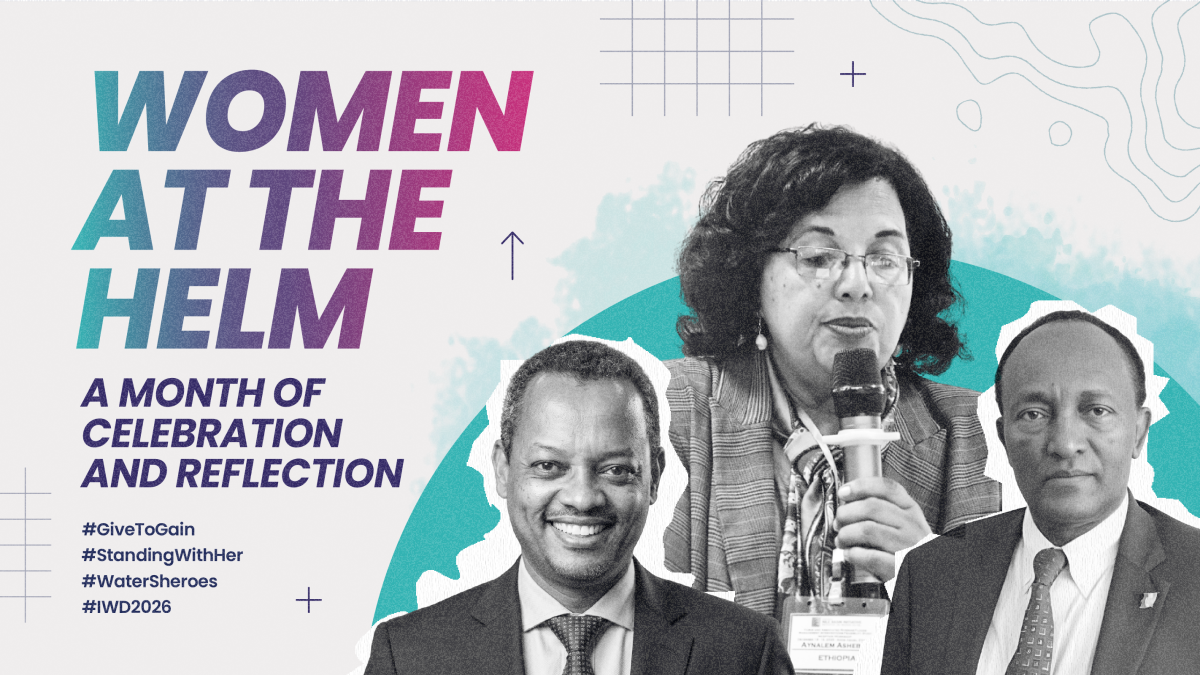
This year, these two themes converged powerfully in an event on March 5, 2026, when the Cooperation in International Waters in Africa (CIWA) and Ethiopia’s Ministry of Water and Energy co-hosted a webinar, “Women Leaders in Transboundary Water Governance: The Experience from Ethiopia.” The event, organized by CIWA’s Male Champions for Women’s Empowerment (MCWE) initiative, brought together 76 participants from across Africa—government officials, water diplomats, civil society leaders, researchers, and donors—to explore how Ethiopia is integrating a gender-transformative approach into transboundary water management.
As we close out March, it’s worth asking: How can we turn the momentum of these global observances into lasting change for women in water governance?
The Stakes: Why Women’s Leadership in Water Matters
The Gender Gap in Water Governance
Water is life, but who decides how water is managed? Despite women’s central role in water collection, household use, and community resilience, they remain severely underrepresented in decision making. In Ethiopia and across Africa, less than 20 percent of high-level leadership positions in transboundary water institutions are held by women.
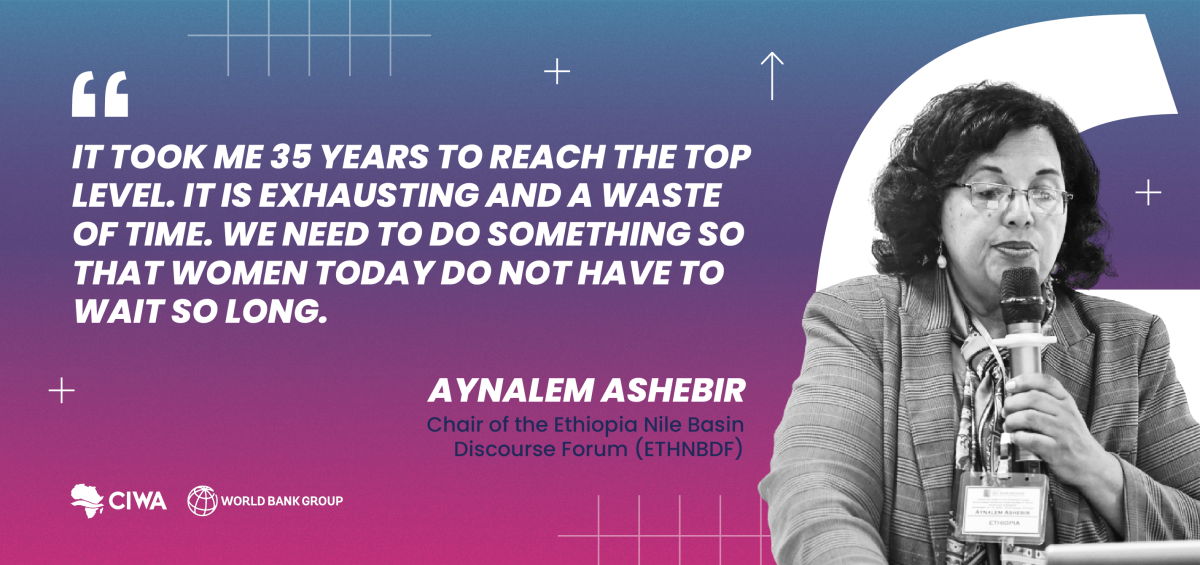
Aynalem Ashebir, Executive Director of Agri Service Ethiopia, put it bluntly: “The problem is that engineering, hydrology, and international relations are fields that are traditionally male-dominated and shape transboundary water governance. Men are overrepresented in senior leadership and technical decision-making roles, while women are largely excluded.”
Moreover, major international water agreements often overlook social impacts of decisions about water, focusing instead on hydropower, irrigation, and state interests—while women, who bear the brunt of water scarcity, are left out of the conversation.
The Cost of Exclusion
When women are sidelined, the consequences ripple across societies in many ways, including:
- Missed opportunities for cooperation: Studies show that women’s participation in peace and resource negotiations leads to more durable agreements and reduced conflict.
- Weaker climate resilience: Women’s knowledge of local water systems and household needs is critical for adapting to floods, droughts, and climate uncertainty.
- Persistent inequality: Without women’s voices, policies fail to address the unique challenges that women and girls face—from waterborne diseases to the daily burden of water collection.
Beleyou Tekola, Executive Officer for Transboundary Water Management in Ethiopia captured the urgency: “Supporting women’s leadership in transboundary water governance is not optional. It is essential for a sustainable, peaceful, and just future.”
A Webinar Dedicated to the Gender-Transformative Approach
The March 5 Webinar: A Catalyst for Change:
The webinar was more than a discussion—it was a call to action. Participants included representatives from the Ethiopian Nile Discourse Forum, river basin organizations, NGOs, women’s networks, and international partners. The event featured keynotes from Beleyou Tekola and Aynalem Ashebir, followed by interactive breakout sessions on the challenges and opportunities for women in the sector, strategies to engage more women professionals, and the role of men as allies in advancing gender equality.
Key Insights from Women Leaders:
- Breaking barriers
Both Tekola and Ashebir highlighted the structural and cultural barriers women face:
- Limited access to education and field assignments in STEM and water-related disciplines
- Institutional biases that favor men for leadership roles
- Work-life balance challenges, exacerbated by patriarchal cultural expectations
b. The power of inclusion
When women lead, outcomes improve:
- Stronger cooperation and conflict prevention
- More balanced policies that integrate social and environmental needs
- Greater resilience to climate shocks, as women’s local knowledge informs adaptation strategies
Tekola emphasized: “When women lead, institutions strengthen, conflicts decline, and outcomes improve—for people, for ecosystems, and for future generations.”
Men as Allies: The Role of CIWA’s Male Champions
A standout theme was the critical role of men in advancing gender equality. CIWA’s MCWE, launched in 2023, now includes 28 active champions who advocate for policy reforms, mentorship, and workplace inclusion.
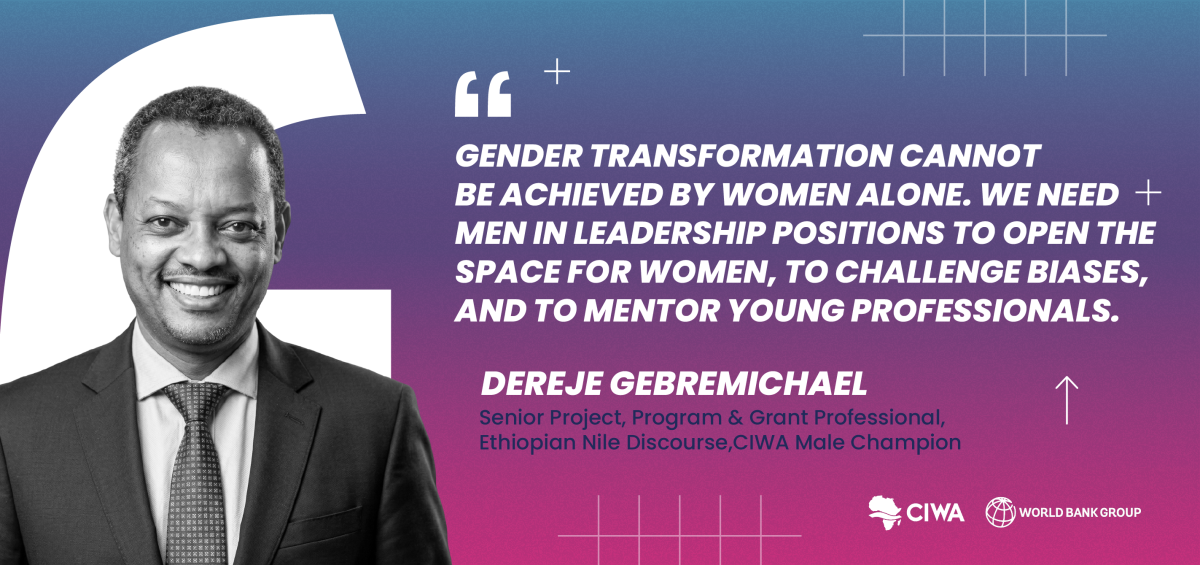
Actions for male allies include:
- Advocate for gender equality in decision making
- Mentor and sponsor women professionals
- Challenge stereotypes and support inclusive workplaces
- Participate in continual learning and awareness-raising
From Dialogue to Action: CIWA’s Roadmap for Gender Equality
CIWA’s Commitment to Gender-Transformative Water Governance
CIWA, a multi-donor partnership, has been at the forefront of promoting gender equality in Africa’s transboundary waters. Its Gender Equality and Social Inclusion (GESI) Framework guides efforts to:
- Disrupt patriarchal norms that limit women’s participation
- Support women’s leadership through capacity-building and networking
- Engage men as allies to challenge cultural barriers
Strategies for Progress
The webinar’s breakout sessions generated concrete strategies for advancing women’s leadership:
- Education and mentorship: Encourage girls in science, technology, engineering, and mathematics (STEM), promote peer learning, and create inclusive educational pathways
- Institutional reform: Address workplace barriers, ensure equitable promotion, and establish complaint mechanisms
- Policy and data: Develop gender-sensitive legal frameworks, collect sex-disaggregated data, and track progress
- Regional collaboration: Organize regular knowledge-sharing events and expand networks across Africa
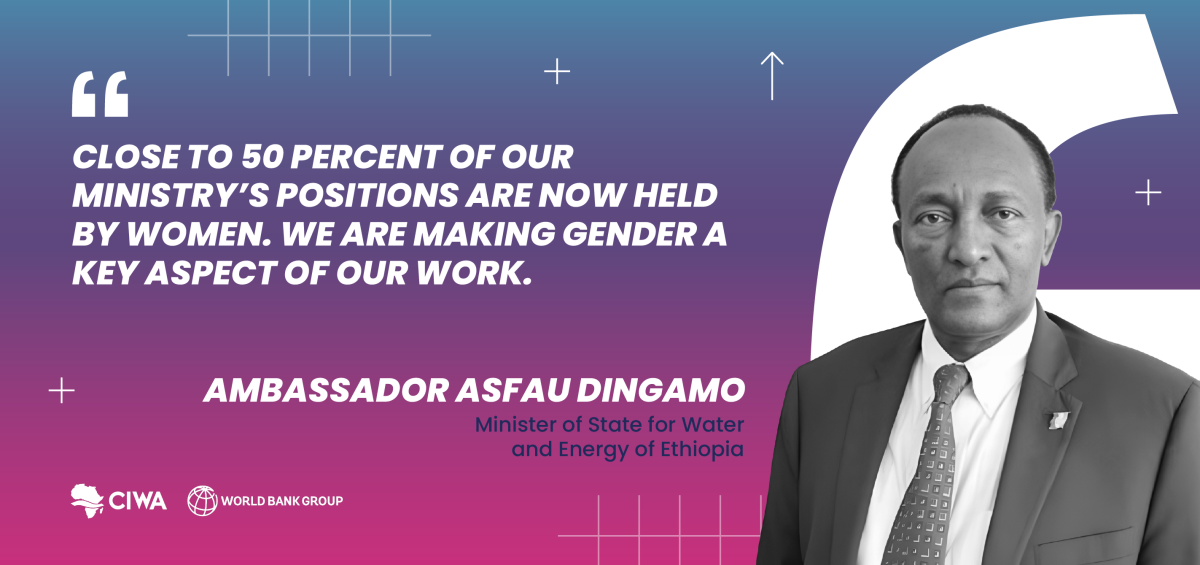
Ethiopia’s Leadership
A Call to Action: How You Can Contribute
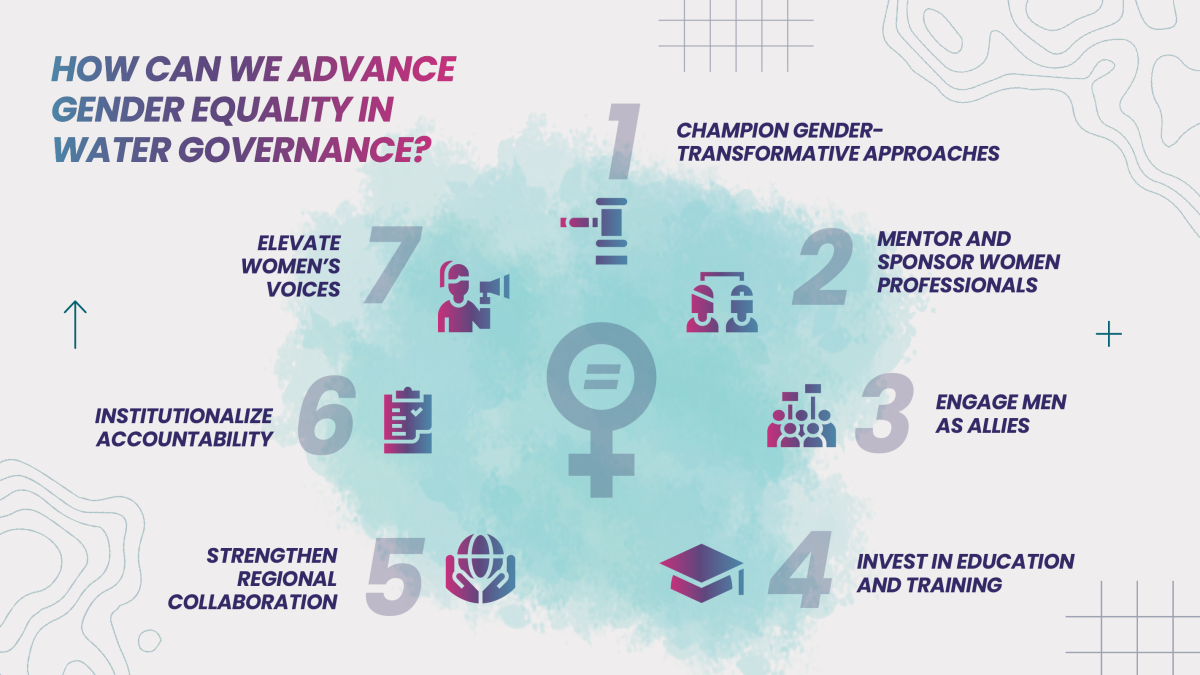
As we reflect on International Women’s Day and World Water Day, the message is clear: Gender equality in water governance is not just a moral imperative—it’s a strategic necessity. Here’s how you can help:
1. Champion gender-transformative approaches
- Integrate gender equality into your institution’s policies, programs, and decision making
- Advocate for women’s representation in leadership and technical roles
2. Mentor and Sponsor Women Professionals
- Support young women in accessing education, field experiences, and leadership opportunities
- Create mentorship programs within your organization or sector
3. Engage Men as Allies
- Encourage male colleagues to challenge biases and support inclusive workplaces
- Join or support initiatives such as CIWA’s Male Champions for Women’s Empowerment
4. Invest in Education and Training
- Promote STEM education for girls and young women
- Support peer learning and knowledge-sharing platforms
5. Strengthen Regional Collaboration
- Participate in or organize events that bring together women leaders, practitioners, and allies
- Share best practices and lessons learned across borders
6. Institutionalize Accountability
- Collect and analyze sex-disaggregated data to track progress.
- Embed policies on gender equality in transboundary water institutions
7. Elevate Women’s Voices
- Ensure women are included in all transboundary water dialogues
- Amplify their contributions and leadership in your networks
The Time for Action is Now
The March 5 webinar was important, but the journey is far from over.
As Aynalem Ashebir urged: “To address the challenges of transboundary water governance, we must start with the people most affected women.”
This March, we celebrated the progress made by women in water governance. But celebration must be paired with commitment. The experiences from Ethiopia and CIWA’s work show that change is possible—but it requires all of us to act.
What will you do to support women’s leadership in water governance?
Share your thoughts and commitments in the comments. Let’s turn the momentum of March into a movement for lasting change.