



Financial Information
This webpage provides financial updates on the CIWA program. Unless otherwise noted, the financial information, including exchange rates, reflects the status as of June 30, 2025.
CIWA is supported by a Multi-Donor Trust Fund (MDTF) and administered by the World Bank on behalf of contributing development partners. CIWA’s ongoing donors are Austria, Denmark, the European Commission, the Netherlands, Norway, Sweden, and the United Kingdom. This MDTF is known as a “Programmatic Multi-Donor Trust Fund,” where donors commit funds to support a thematic framework rather than a specific project. Within this framework, CIWA supports projects executed by recipient organizations and operations executed by the World Bank.
Funding Process and Disbursement
CIWA was initially designed as a US$200 million program over a span of 10 years. In 2021, the program was extended for another five years to 2026 without meeting the fundraising target. In FY24, CIWA, Advisory Committee members, and internal World Bank stakeholders endorsed a new CIWA pipeline to coincide with a second five-year extension. The Trust Fund extension (through 2031) was approved by the World Bank and agreements were updated with donors (UK, Netherlands, Sweden, Austria). The new pipeline is valued at US$151 million over all previously allocated funds (e.g., funds for grants not in the new pipeline), however, the FY25-26 pipeline is deliberative as significant fundraising must occur for full implementation. The FY25 CIWA funding goal (Figure A4.1) is the total value of the new pipeline (US$151 million) plus the funds allocated to that point ($181 million), which is US$332 million rounded down to US$300 million, and is updated from the FY23 value of US$200 million, inclusive of the new FY25-26 pipeline and all allocated funds to that point
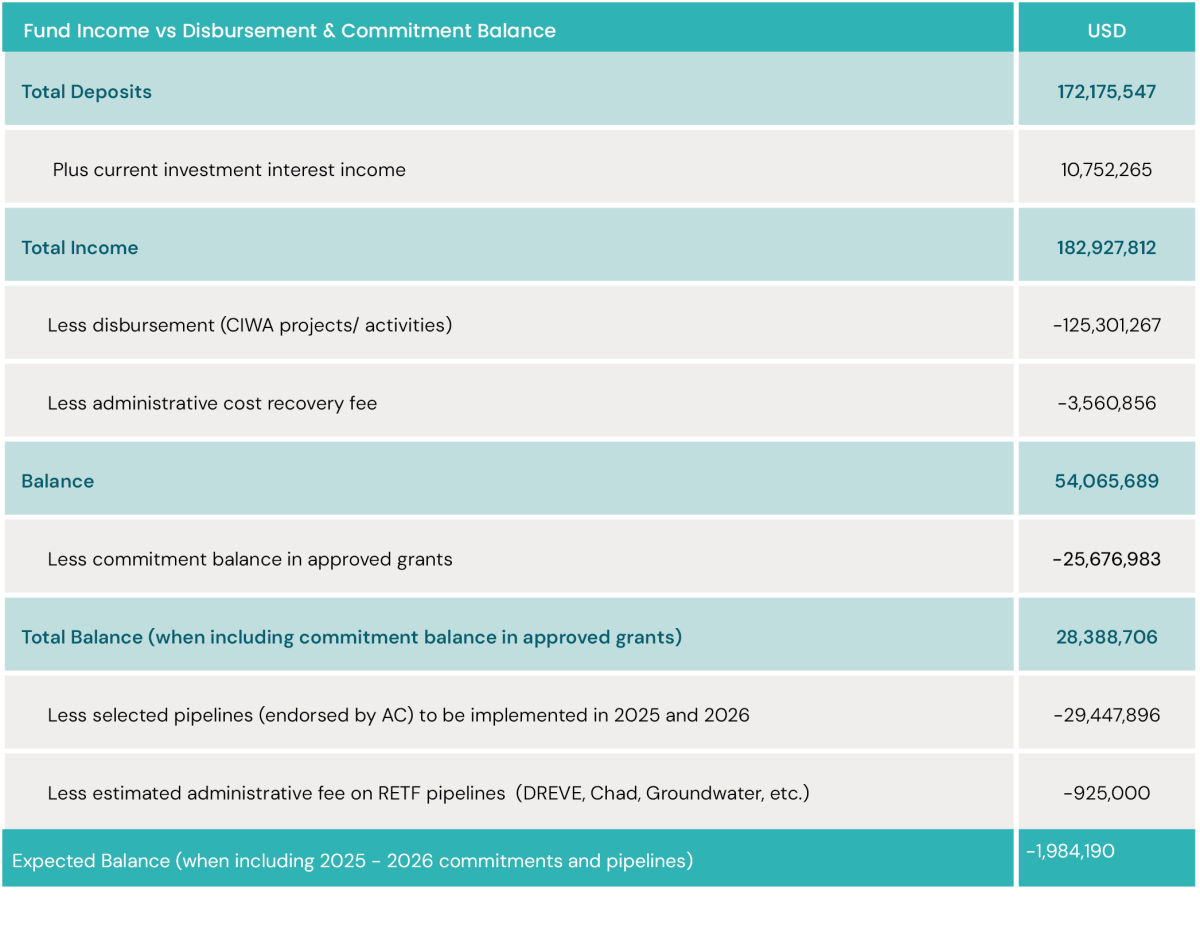
Consistent with standard World Bank Trust Fund practices, donors pledge funding for CIWA (total pledge was US$179.5 million), and funds are deposited on an agreed schedule (deposits total US$172.2 million). Under CIWA’s strategic planning efforts, funding has been allocated to specific projects and technical assistance (current allocations are at US$181.4 million) around the broad themes and areas endorsed by the CIWA Advisory Committee.
Annex 4 of the Annual Report 2025 presents additional details on pledges, deposits, allocations, commitments, and disbursements. After the funds are allocated to specific activities, CIWA works with clients to develop Grant Funding Requests to transfer funds into activity accounts. The World Bank follows technical, legal, and fiduciary procedures to approve projects and commits funds through its standard fiduciary processes (grant commitments totaled US$151.0 million). Funds were disbursed according to the grant agreements and financing plans (disbursements reached US$125.3 million). Figure A4.1 presents the overall status. Most of CIWA funds (98 percent) are allocated to existing projects and technical assistance. Any significant future activities depend strictly upon the availability of new donor contributions.
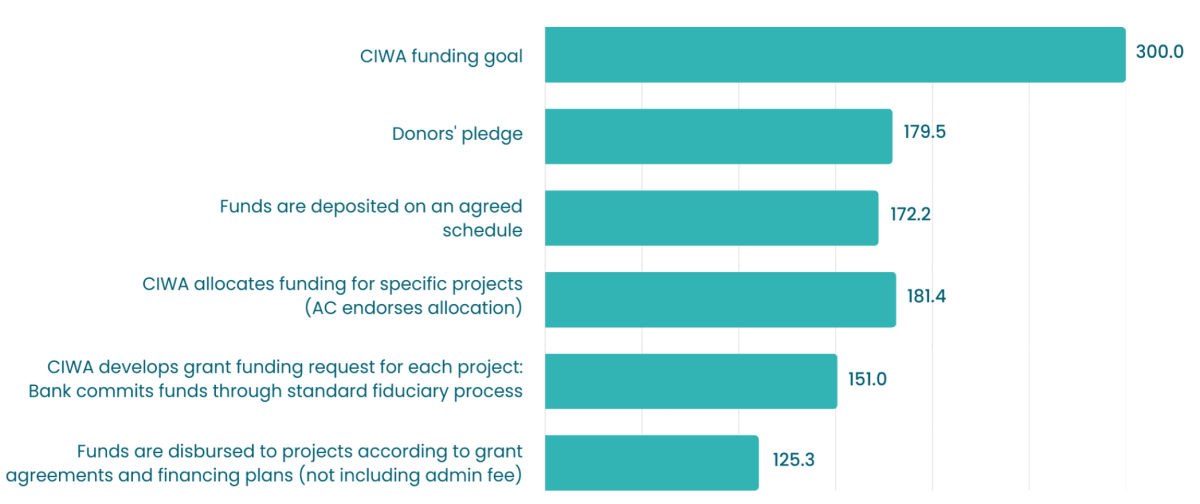
Figure A4.1. Overview of Donor Pledges, Deposits, Allocation, and Disbursement
Most of CIWA funds (98 percent) are allocated to existing projects and technical assistance. Any significant future activities will depend strictly upon the availability of new donor contributions.
Donor Pledges, Deposits, and Allocations
Donors deposit funds in the CIWA MDTF account according to an agreed schedule that is detailed in the Administration Agreement or other documents exchanged between the Bank and donors. This schedule may be revised, if necessary, to meet project disbursement requirements.
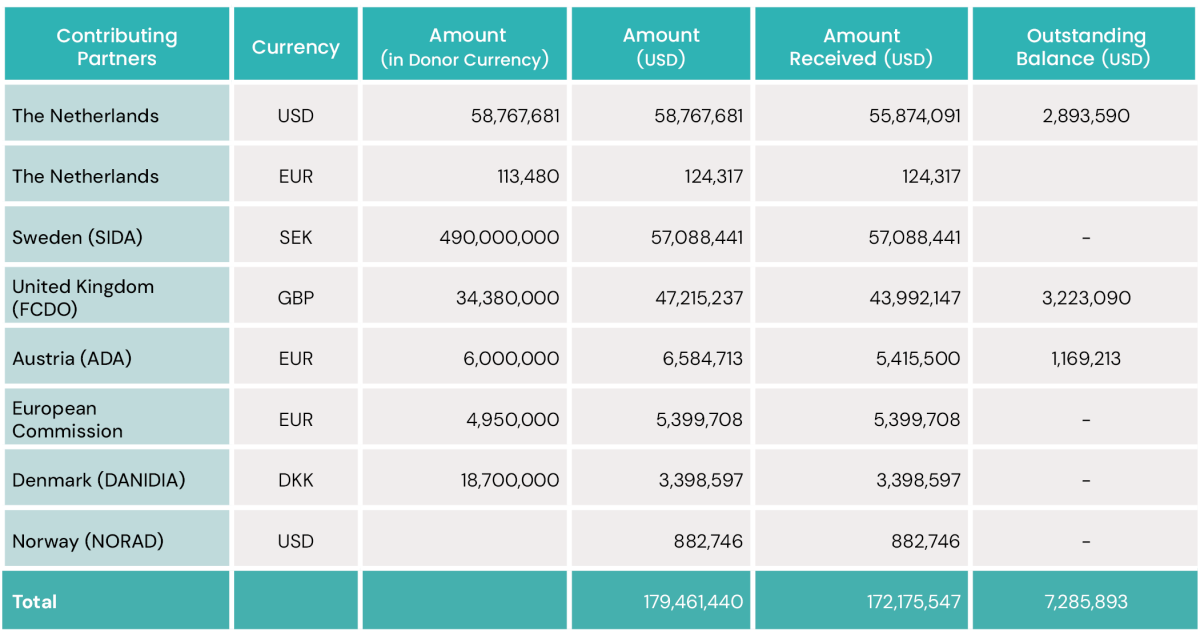
As of June 30, 2025, US$181.4 million ($180.4 million in projects and $1.0 million in reserve) has been indicatively allocated to CIWA projects and activities.8 Most of CIWA funding (98 percent) has been assigned to activities under preparation or implementation. Unallocated funds amount to US$3.6 million, and current demand for support far exceeds current resources.
Given the centrality of shared waters to Africa’s economic, social, and environmental progress, we anticipate that this demand will continue to grow (see Table A4.2). between the Bank and donors.
This schedule may be revised, if necessary, to meet project disbursement requirements. Table A4.1 (above) provides the status of donor pledges and deposits.
Income, Disbursement, and Funding Balance
By the end of FY25, CIWA received US$182.9 million, including US$172.2 million in donor payments and US$10.7 million in investment income from the CIWA account. Cumulative disbursements are US$128.8 million, including US$125.3 million in projects and US$3.5 million in administrative fees. The pace of disbursement increased in FY25. The balance of grant commitments is US$25.6 million. Table A4.4 presents the balance available in the CIWA account, which is approximately US$54.0 million, or a balance of -US$1.9 million when the balance of current commitments of US$25.6 million and an additional US$29.4 million in the latter half of FY26 and FY27 are considered.
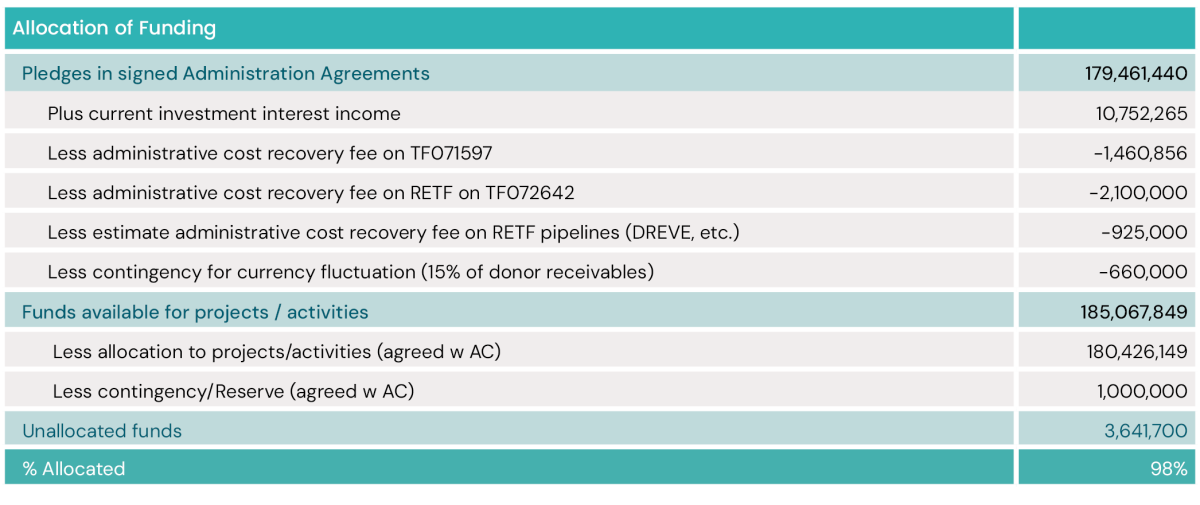
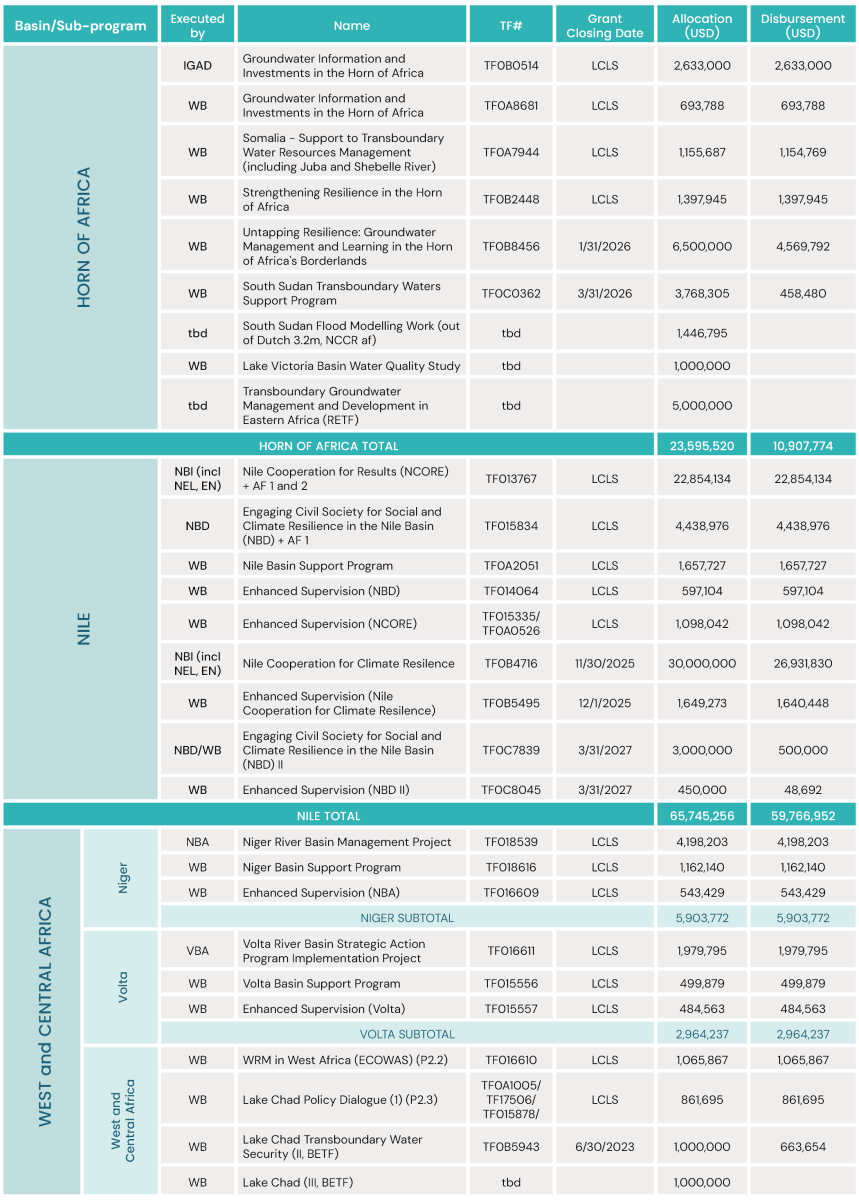
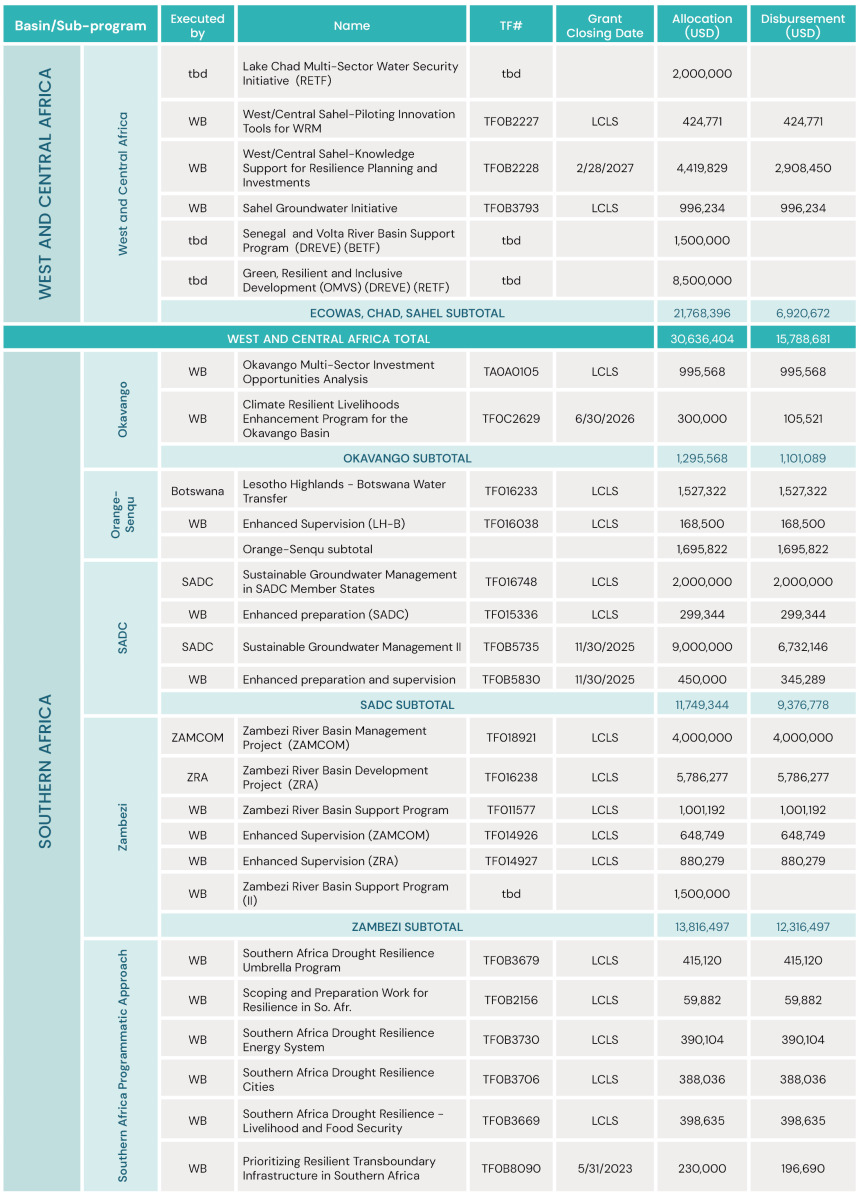
Table A4.2. Overview of Availability and Allocation of Funding
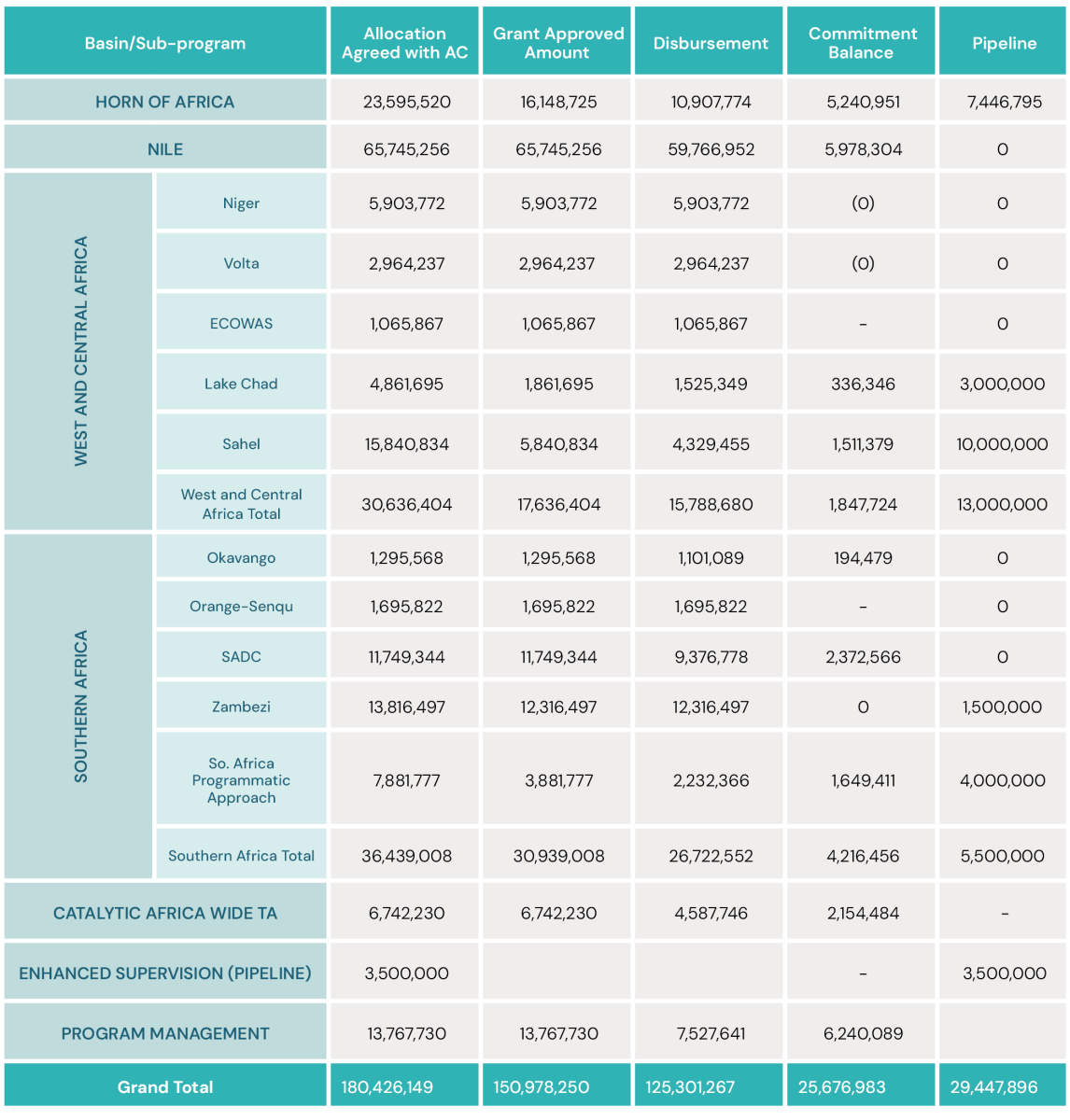
‘Allocation’ refers to the endorsement of allocation of funds by the CIWA AC—both moved to actual grants and notional allocations yet to move to grant activity accounts. ‘Commitment’ refers to recognition by internal World Bank systems that funds have been assigned to a project or activity. Funds are committed when the World Bank trust fund management has approved a grant funding request (GFR), putting in place a contractual or scheduled commitment that leads to actual expenditures in the future. ‘Disbursement’ refers to the transfer of funds from the grant account to the client’s designated account after the Bank clears a request for specific investments. For Bank-executed grants, disbursements are payments made against a purchase order or contract. ‘Pipeline’ activities in the sub-program are those for which a conditional allocation endorsement was made or subject to the approval of the World Bank project and trust fund systems. Pipeline development is ongoing, subject to change including notional allocations after July 1, 2025.
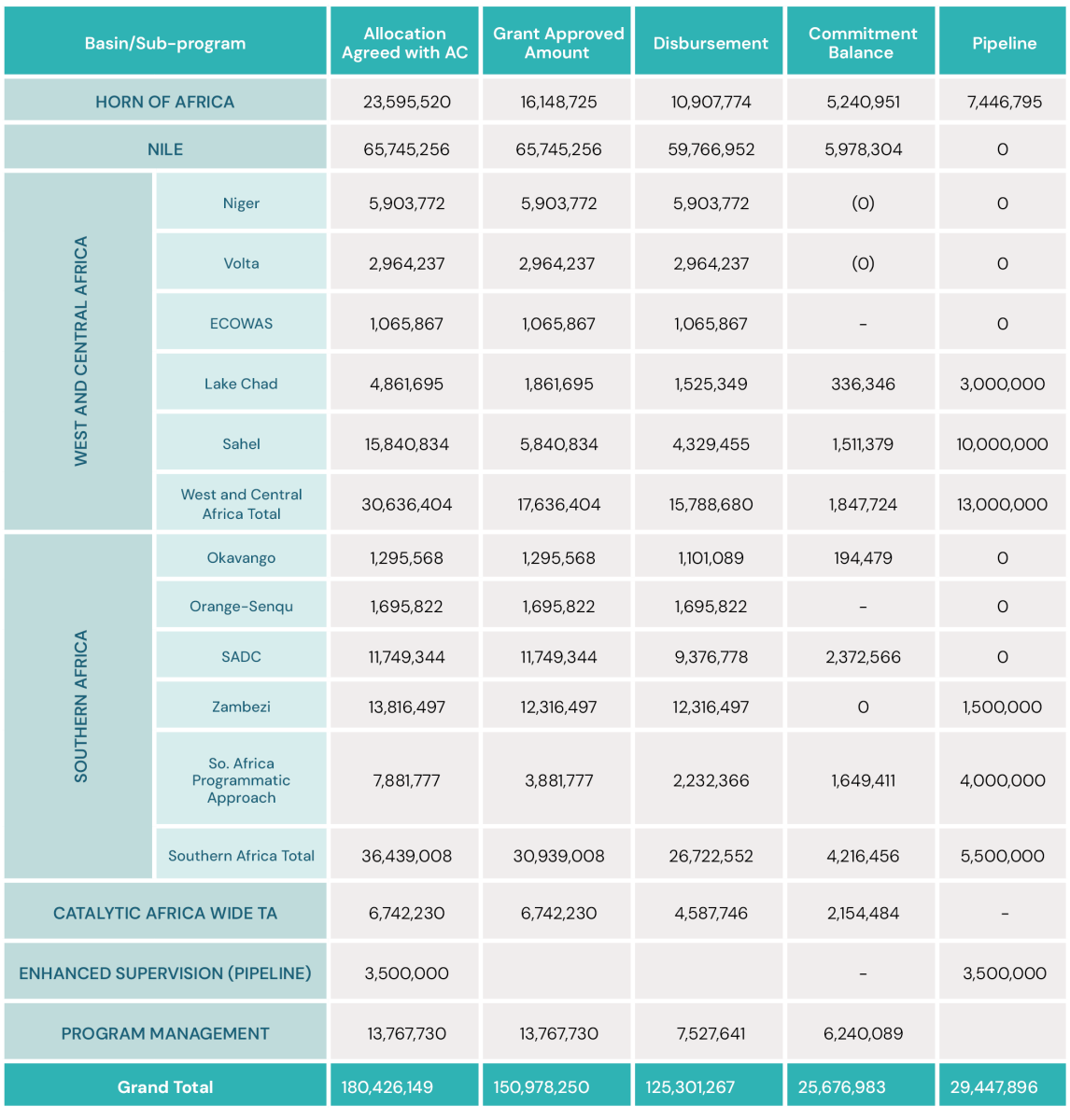
Table A4.3. Allocated, Committed, Disbursed and Pipeline Amounts
‘Pipeline’ activities in the sub-program are those for which a conditional allocation endorsement was made or subject to the approval of the World Bank project and trust fund systems. Pipeline development is on-going, subject to change including notional allocations after June 30, 2025.
Financial Summary of Program Management
CIWA management costs include expenses incurred by the Program Management Unit (PMU) and the World Bank’s technical experts who provide strategic advice and support. In addition to staff and consultant costs, this category includes costs associated with CIWA donor coordination, outreach, and communications, monitoring and evaluation, mid-term review, reporting, partnership meetings, and dissemination activities including website, brochures, and publications.
CIWA has been cost-efficient in its management, benefiting from the robust financial management and monitoring systems put in place at the program’s inception. Since the start of the program in 2011, CIWA has spent 4.2 percent of the total contribution, keeping PMU expenses cost-efficient.
Future Funding Requirements and Resource Mobilization
CIWA regularly examines its existing portfolio and plans pipelines to achieve results across Sub-Saharan Africa. Lessons learned from implementation are integrated into planning future engagements, alongside application of risk management tools in the context of CIWA finance, detailed in Annex 3.
Demand for the CIWA program has exceeded the program’s current resources. At present, CIWA has allocated 98 percent of its available funding. In response to substantial demand from its clients and to expand its impact, the program has identified a pipeline of potential projects that exceeds current resources.
CIWA is therefore working actively to explore opportunities for additional sources of funding.