




Chipo Mungenge: Striving for a world that values biodiversity conservation
Posted in : A View From The Field on 6 May 2026
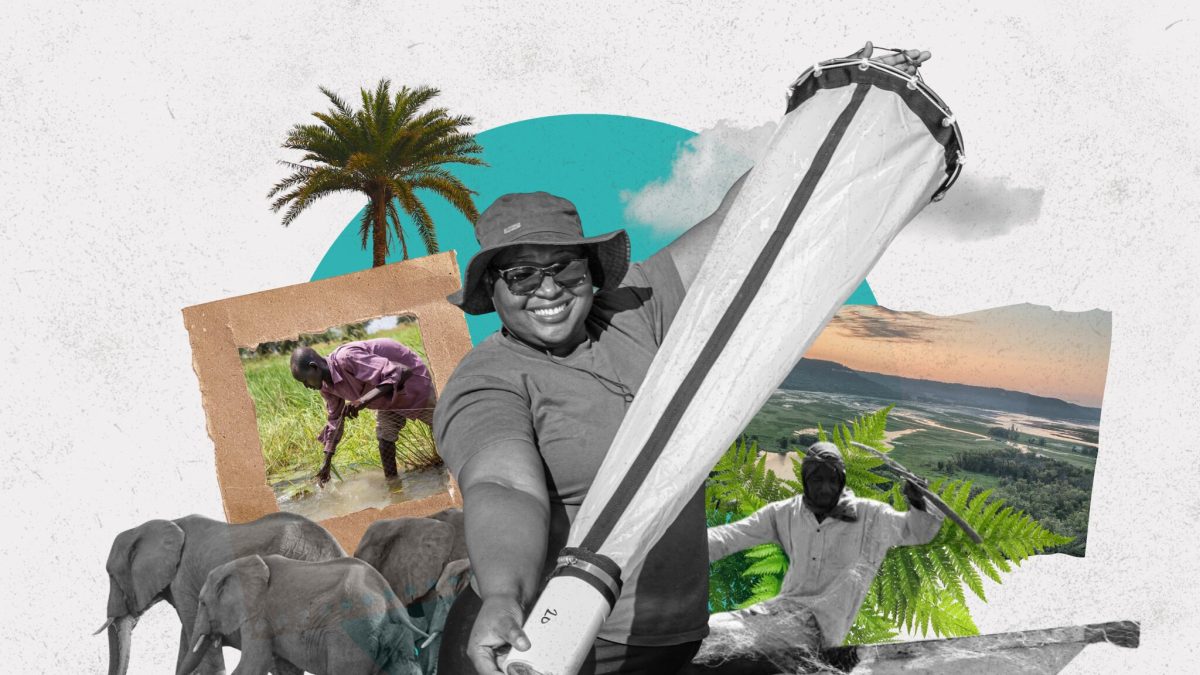
Without a scholarship from the SADC-GMI Young Professionals program, supported by CIWA, Chipo Perseverance Mungenge never would have obtained her PhD in Zoology from Rhodes University in South Africa, where she focused on aquatic ecology and biodiversity conservation.
And if Mungenge, a native Zimbabwean, hadn’t gotten her PhD, she wouldn’t have grown so much as a person—or learned about the importance of communities to groundwater management, discovered the existence of a previously unrecorded crustacean, or combated gender stereotypes in the male-dominated water field.
“My PhD built me as an individual,” says Mungenge, 33, now a freshwater aquatic ecologist. Whether it was adapting to the South African culture, dealing with a challenge in her lab, or facing gender stereotypes during field work, “It helped me conquer my fears and develop resilience,” she says. “I discovered a level of patience I never knew I had. I surprised myself with how hard I could push, how deeply I could persevere. This journey changed me profoundly.”
Mungenge, the only one in her family to go to college, and her two older brothers were raised by their widowed mother, who made ends meet by selling pre-owned clothing and shoes after the NGO where she worked shut its doors. Her mom scraped together enough money to pay for her daughter’s education at the University of Zimbabwe, where she received her bachelor’s and master’s degrees.
Her academic career would have ended there if not for the SADC-GMI scholarship of about US$5,400 a year and a second partial scholarship from the National Research Foundation of South Africa that supported her two-year research project and some living expenses. She received her PhD in 2024.
Tapping local knowledge to preserve biodiversity
Mungenge’s project explored the connections between groundwater-dependent ecosystems (GDEs) and biodiversity in the Khakea/Bray Transboundary Aquifer, which spans South Africa and Botswana.
“GDEs are highly dynamic, sensitive ecosystems but are relatively understudied in South Africa,” she says. “We found them to support surprisingly high levels of biodiversity, including several endemic species.” She also discovered a fairy shrimp that had never been recorded on the South African side of the aquifer and explored the key drivers influencing the dynamics of species communities in the ecosystems.
She also realized the significant role that communities can play in biodiversity conservation. “It is important to integrate both scientific and local knowledge when we work with groundwater management, which must be adaptive, especially with so much climate variability, land-use changes, and social pressures,” she says.
Mungenge and her colleagues were puzzled when they saw traps in pans in temporary wetlands, which are essentially ponds that lose their water in the dry season. It was only by meeting with community members that she learned they were hunting bullfrogs for food.
“We talked with the community about the importance of conserving biodiversity, particularly by reducing the overharvesting of bullfrogs—a traditional delicacy and valued food source. We encouraged them to consider alternative protein options, such as livestock and poultry, to ease pressure on wild populations. They were open to exploring more sustainable practices,” she explains.
Resisting gender stereotypes in the field
Community members were not the only ones who needed to be educated.
During her research, Mungenge felt that male colleagues discounted her technical expertise because of her gender. “You are sidelined as a woman from certain tasks in the field that are physically demanding when you are actually able to do them.”
For example, when it came to collecting sediment samples from deeper pans in the temporary wetlands, she was told that a man would have to accompany her on the physically demanding task.
She was undeterred. “I would say that I could do it,” she recalls. Embodying her middle name, Perseverance, “I would just put my gumboots on and go into the water and get my samples.”
And Mungenge says that is another reason why her PhD is a personal triumph “and a stride towards gender equality in a male-dominated scientific field. It symbolizes the dismantling of barriers and showcases the strength and potential of women in academia. My presence in this field underscores the fact that gender does not dictate research excellence.”
She says that “to solve water resources management problems, we have to have diverse perspectives. When decision making is dominated by one gender, we are missing out on insights, experiences, and solutions from the other.”
Working toward a world that values biodiversity conservation
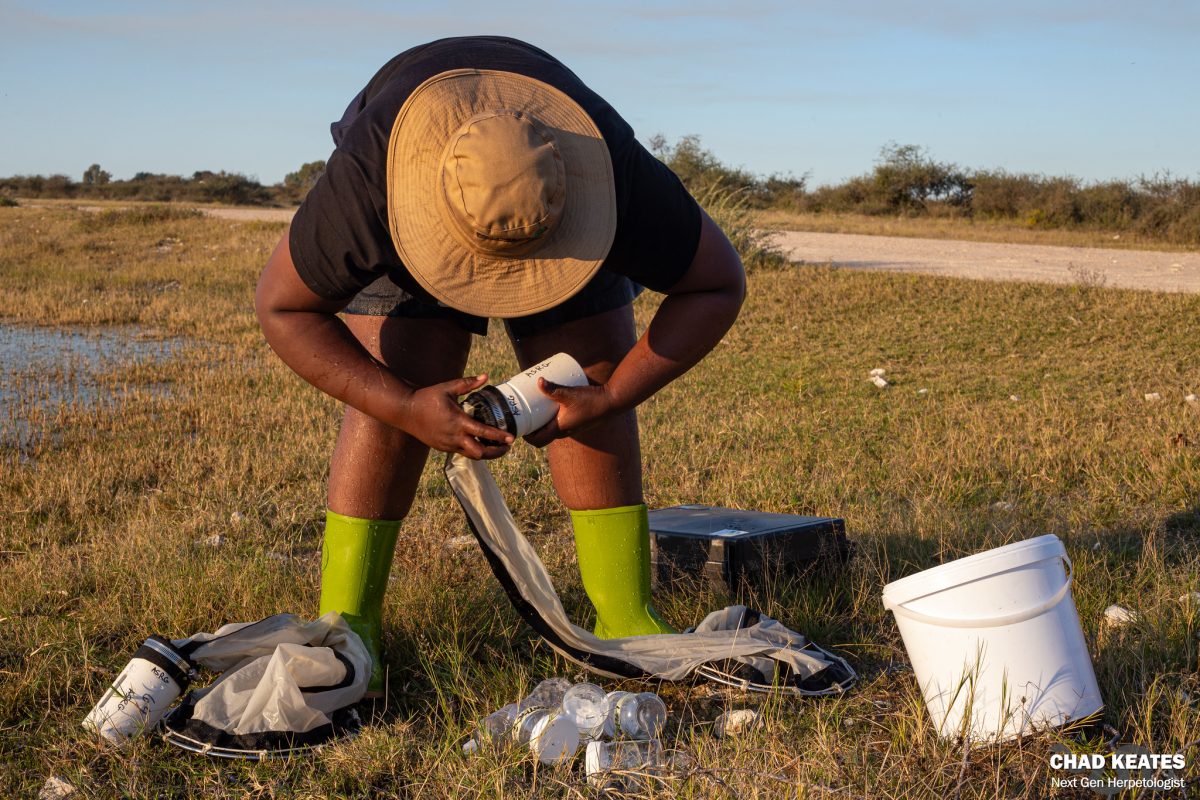
Today, Mungenge is a postdoctoral research fellow at both the South African National Biodiversity Institute and the University of Capetown’s African Climate and Development Initiative. She is evaluating whether ecosystem-based approaches were effective for climate change adaptation within South African freshwater ecosystems.
Her current research sits at the intersection of science and policy, aiming to understand not only how freshwater ecosystems respond to climate pressures, but also how nature-based solutions can support both ecological resilience and human well-being. For Mungenge, this work is about informing real-world decisions that help preserve freshwater ecosystems before they reach critical tipping points.
“My hope is that we become more proactive in valuing and protecting our freshwater ecosystems, acting before they reach a point of irreversible degradation,” she says. “Conservation should be a commitment we make now, for the sake of future generations and the biodiversity that depends on these vital systems.”